Hey guys, welcome back to the blog! If you’re in the market for moving pallets, parts, or small loads around a warehouse, electric small forklifts are basically the unsung heroes of modern operations. As someone who’s been supplying these bad boys for a few years now, one question I get nonstop is: “How long can one of these actually last?” It’s not a trivial question—this kit is a big investment for any small business, big shop, or even a tight-space retail fulfillment spot. I’ve seen folks shell out cash for a new forklift then panic a year later when it’s acting up, so let’s break this down straight, no corporate jargon, real talk from someone who’s on the supply side every day. Electric Small Forklift
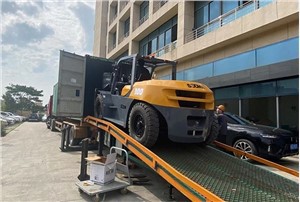
First off, let’s set the baseline—what even counts as an “electric small forklift” here? We’re talking the ones under 5,000 lbs capacity, right? The compact stand-up or sit-down models used in tight aisles, loading docks, and back-of-store areas, not the big counterbalance units for heavy shipping containers. That’s important because lifespan varies wildly between these and the bigger rigs. Now, when I say lifespan, I’m not just talking about “how long it runs before the battery dies.” I’m talking about total useful service life—when you can still rely on it for daily use without dropping tons on repairs that cost more than half the unit’s price.
From what I’ve seen working with mechanics, data from our service records, and industry chats with other suppliers, the average electric small forklift hits 10,000 to 15,000 working hours before it starts needing too much TLC. Wait, hold on—let’s put that in perspective for non-industry folks. If you run your forklift 8 hours a day, 5 days a week, that’s 2,080 hours a year. So that translates to roughly 5 to 7 years of regular use. But if you run it extra hard—12 hour shifts, 6 days a week, constant lifting and maneuvering through tight spaces—you’re looking more like 3 to 5 years. On the flip side, if you’re a small shop that only uses it for a couple hours a day, 4 days a week, that 10,000 hour mark could stretch to 8 or even 10 years. That’s a huge range, and it all comes down to two big things: how you use it, and how you take care of it.
Let’s talk about use first, because that’s the biggest factor most people don’t consider. Electric small forklifts are way less rough on parts than gas or diesel ones, but they still take a beating. For example, if you’re constantly slamming the accelerators and brakes (not just bad driving, but some jobs are chaotic), that wears out the motor and brake components way faster. Or if you’re dragging pallets instead of lifting them, putting extra strain on the forks and mast—that cuts years off the life of the hydraulic system, which is super expensive to fix. And let’s not forget the space factor: these are small, so they’re always turning sharp corners, squeezing between shelves, bumping into things. Even a tiny scrape or bump might not seem like a big deal, but if it knocks the alignment of the mast or the wheels, that leads to uneven tire wear, harder steering, and more stress on the motor. I’ve had customers who run their forklifts in super tight, high-traffic areas tell me their units are on the lower end of that 3-7 year range, and it’s almost always from daily wear and tear from constant maneuvering.
Then there’s the battery, which is the heart of any electric forklift. A lot of people ask me, “When does the battery die, not the whole machine?” Lead-acid batteries (the most common type for small electric forklifts) usually last 3 to 5 years with regular charging and maintenance. Lithium-ion batteries, which are more popular now for their quick charges, go a bit longer—4 to 6 years. But here’s the thing: the battery doesn’t just die on its own. If you leave it plugged in 24/7 (a common mistake, because folks don’t know better), or let it drain completely every single time before charging, or expose it to extreme temperatures (like leaving it in a freezing warehouse in winter or a sweltering backlot in summer), it’ll die way faster. I’ve seen a customer kill a perfectly good $1,500 battery in 18 months just because he’d charge it overnight every night, even when it was only at 80% capacity. That’s a costly mistake, and it’s one I make sure to warn every new customer about.
Now, if you’re thinking, “5 years max? That’s not long for a big purchase”—hold up. There are plenty of ways to extend that lifespan, and I’m gonna be real: most of the time, the reason a forklift dies early is not because it’s a bad machine, it’s because of lack of maintenance. Let’s get into the maintenance stuff, because this is where as a supplier, we see the biggest difference between forklifts that run for 10 years and ones that are junk after 3.
First, routine checks. We tell every customer to do a 10-minute walkaround every single shift. Check the tires for nails or flats, make sure the forks aren’t bent, the brakes feel responsive, the battery connections are tight (no corrosion), and the hydraulic fluid levels are where they should be. That’s not hard, right? A lot of small businesses skip this because they’re swamped, but even finding a tiny issue like a loose connection early can prevent a motor burning out later, which is way more expensive.
Then there’s scheduled service. For most electric small forklifts, you should get a professional tune-up every 500 hours of use. That’s like an oil change for your car, except for a forklift. They’ll check the steering system, lubricate the moving parts, test the battery’s performance, and make sure the hydraulics aren’t leaking. I’ve had a customer who skipped two tune-ups, and his forklift’s mast started sticking so bad he had to replace the whole hydraulic system—cost him $4,000, which is more than a brand new entry-level electric small forklift. Don’t be that guy.
Also, how you charge the battery. For lead-acid, don’t overcharge it—once it’s fully topped off, unplug it. Don’t let it sit in a discharged state for more than a day, or the plates will sulfide and die. For lithium-ion, you can top it off as needed, no need to drain it completely, and you don’t have to wait for it to die to plug in. But for both, keep the battery clean—wipe off any dirt or acid buildup on the terminals every few weeks, that prevents corrosion.
Wait, let’s talk about some of the success stories I’ve seen, to back this up. Last year, we sold a small electric stand-up forklift to a small grocery chain that uses it to restock back rooms and move pallets of produce. They run it 6 hours a day, 5 days a week, and do all their own maintenance in-house. That unit is now 8 years old, still going strong, no major repairs. They just replaced the battery last year, which is normal at that point. On the other end, a construction supply shop we sold to 2 years ago runs their forklift 10 hours a day, 6 days a week, and never does routine checks. They had to replace the brakes and the motor last month, and they’re already talking about replacing it in another year. That’s the gap right there.
Another thing that affects lifespan: build quality. Not all electric small forklifts are made equal. As a supplier, we’ve tested different brands, and the cheaper ones might last 3 years, while the mid-range ones can hit 7 or 8. The key differences are the motor (brushless motors last way longer than brushed ones), the hydraulic system, and the frame. A good frame that’s made of thick steel won’t bend if you bump a shelf, which saves alignment issues. Brushless motors have fewer moving parts, so less to break, which means longer life. That’s why when customers ask me about lifespan, I always tie it to build quality too—if you buy a cheap no-name unit, don’t expect it to last as long as a reputable one, even if you take good care of it.
Wait, let’s address a common myth: electric forklifts last longer than gas ones, right? Yeah, that’s true. Gas forklifts have engines with tons of moving parts, exhaust systems, filters that need changing constantly. Electric ones have motors and batteries, which have fewer parts (especially brushless motors) and less maintenance. So if you’re choosing between gas and electric for a small operation, electric’s longer lifespan is a big plus. I’ve heard of gas small forklifts lasting 3-5 years, tops, while electric ones can hit 10 with good care. That’s a huge difference for your budget.
Now, what about when you should replace it instead of fixing it? Because a lot of people will hold onto a forklift way past its useful life, just to avoid spending money. If you’re having to do major repairs every 6 months—like replacing the mast, the motor, or a big hydraulic part—it’s time to start thinking about a replacement. Those repair costs add up faster than you think. For example, if a new entry-level electric small forklift is $10,000, a $5,000 motor replacement is almost half the cost. If you’re doing that every 2 years, you’re spending more than a new unit over time. That’s something I always bring up to customers, because I want them to make the smart choice, not just hold onto a dying forklift to save a buck.
Let me wrap this up with a quick recap to make it easy. The average lifespan of an electric small forklift (under 5,000 lbs) is 5 to 7 years with regular use, translating to 10,000 to 15,000 working hours. But that number can go up to 10 years if you use it moderately, do daily walkaround checks, get scheduled tune-ups, and properly maintain your battery. It can drop to 3 years if you run it hard, skip maintenance, or buy a low-quality unit.

Now, if you’re in the market for an electric small forklift, or you’re looking to replace your current one that’s on its last legs, we’ve got a range of units built for small spaces, with brushless motors, reliable batteries, and easy maintenance. We’ve been supplying these rigs for years, and we stand behind every unit we sell. If you want to talk about which model fits your needs, what kind of lifespan you can expect based on how you’ll use it, or even questions about maintenance, hit us up for a procurement chat. We’re here to help you make the best choice for your business, no sales pressure, just straight answers.
Port Machinery References:
- Material Handling Industry Association. (2022). Electric Forklift Lifespan and Maintenance Best Practices.
- Industrial Truck Association. (2023). Small Electric Forklift Operational Data and Service Life Studies.
- Battery University. (2021). Lead-Acid and Lithium-Ion Battery Lifespan for Material Handling Equipment.
Fujian SOCMA Machinery Manufacture Co., Ltd.
Fujian SOCMA Machinery Manufacture Co., Ltd. is one of the most professional electric small forklift manufacturers and suppliers in China. We warmly welcome you to buy customized electric small forklift made in China here from our factory. If you have any enquiry about cooperation, please feel free to email us.
Address: Taiwanese Investment Area, Quanzhou, Fujian, China
E-mail: marketing@socmamarketing.com
WebSite: https://www.socma-forklift.com/
