What’s up if you’re running a surface-mount component operation or sourcing cover tapes for your packaging line? You know that cover tape peel strength is make or break—too weak and it’ll pop open mid-transit, dumping your resistors, capacitors, or tiny ICs; too strong and your line’s pick-and-place machines will stall, costing you downtime and parts. As a cover tape supplier who’s worked with 100+ clients over the years, I’ve seen way too many teams mess this up, either because they skip proper testing or rely on the wrong method. Today I’m breaking down exactly how to measure cover tape peel strength right, no jargon, no fancy hoops. Cover Tape
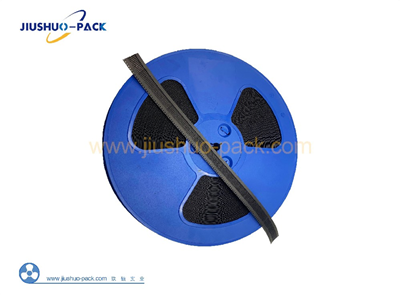
First, let’s get the basics straight: cover tape peel strength is the force required to pull the cover tape off your carrier tape at a specific angle, speed, and temperature. There’s no one “universal number” here—what works for a 0402 chip carrier isn’t going to cut it for a heavy power component. That’s why nailing the test matters.
Step 1: Prep Your Samples Like Your Line Depends On It
I can’t tell you how many times a client sent me a weird half-cut sample or a tape they peeled with their fingers hours earlier, and the numbers were totally off. If your samples are botched, your test is useless. Here’s how to do it right.
First, pick your samples from the same batch, same roll, same lot—no mixing old and new stock. You’ll need at least 5 samples, and for smaller carriers (like 8mm for 0201 parts), do 10 to get solid average data. Then, prep the carrier tape and cover tape: don’t cut the tape too close to the pocket (leave 10mm of space between the pocket edge and the cut line, so you don’t mess with the part that sticks to the carrier). If your cover tape has a moisture barrier layer, make sure it’s not folded or creased—creases cause inconsistent peel force, so toss any samples with wrinkles.
Pro tip from our team: don’t touch the adhesive side of the cover tape with your bare hands. Oil from your fingers ruins the bond, and that’ll make your test force look higher than it actually is. Use nitrile gloves, always.
Step 2: Gear Up For The Test (No You Don’t Need A $10k Lab Machine)
Most people think you need a super tensile tester, but honestly, if you’re a small shop, you can use a basic digital force gauge (the kind with a hook, not just a scale) and a stand. For mid-sized ops, a motorized tensile tester is way easier for repeat tests. Either way, the key settings are non-negotiable.
Angle: You have to peel at 180 degrees. That’s flat parallel to the carrier tape, not 90 degrees (like you’d peel a sticker off a notebook) or 45 degrees. Any other angle gives a wrong number. I’ve seen guys use 90 degrees and wonder why their peel strength was 2x lower than it should be—don’t do that.
Speed: The industry standard is 300mm per minute (that’s ~12 inches per minute). Too fast and you’ll get a spikey, inaccurate reading; too slow and the adhesive might creep, making the force look lower than it is. If you’re testing for specific conditions (like high temp or low humidity), adjust speed only if your client’s spec says so, but stick to 300mm as default.
Temperature: Test at room temp if that’s where your line runs. If you’re shipping to a hot warehouse, test at 40°C (104°F) to make sure the tape doesn’t get too weak, or at 10°C (50°F) for cold storage. Most basic force gauges don’t have temp controls, so you can just leave the sample in a climate-controlled room for 2 hours before testing.
Step 3: Run The Test Yourself (Or Show Your Tester How To Do It)
Okay, now you’ve got your samples, your gear, your settings. Let’s walk through the actual pull.
First, mount the carrier tape securely on the tester. You can use double-sided tape to stick it down, but make sure it’s not covering the part of the cover tape you’re pulling. The end of the cover tape needs to be free—so cut a 15mm tab at the end of the carrier, fold it over, and stick it to the hook on your force gauge.
Here’s the mistake people make: don’t pull the tab too hard before starting. If you pre-peel even 1mm of the tape, the initial force reading will be wrong. Start the tester, pull the tab at 180 degrees, and let it run for at least 50mm of pull. The first 10mm is the “break-in” force, ignore that—your real number is the average of the steady part in the middle.
Let’s talk about what the numbers mean. Cover tape peel strength is measured in Newtons per 10mm of width (N/10mm) because carrier tapes come in different widths (8mm, 12mm, 16mm, etc.). So if you’re testing an 8mm carrier, you’ll adjust the reading to N/10mm by multiplying the average force by 10 divided by 8. For example, if your average pull force is 1.2N on 8mm tape, that’s 1.5N/10mm.
Typical good numbers: For standard polyethylene (PE) cover tape, you want 1.0-2.5 N/10mm. For heat-seal cover tape, it’s usually 2.0-4.0 N/10mm. If it’s lower than that, the tape will pop open during shipping; higher, and your pick-and-place machine might not grab the part without pulling the tape too.
Step 4: Troubleshoot Bad Test Results (Because Your Numbers Are Off, Trust Me)
A lot of times, clients send test results that are all over the place. Let’s fix that.
If your peel strength is higher than it should be: Check if you left adhesive residue on the carrier tape, or if you pre-peeled too much before testing. Also, humidity—if the tape was stored in a dry place, the adhesive gets stiffer, so test after leaving it in normal humidity (40-60% RH) for a day.
If it’s lower: Did you test at the wrong angle? Or maybe the cover tape’s adhesive was contaminated with dust when you were prepping samples. Another one: if the carrier tape is old (more than 2 years), the adhesive might have degraded, so test a fresh roll.
Also, if the peel is “uneven” (part smooth, part jagged), that means the tape is delaminating from itself, not just pulling off the carrier. That’s a bad sign—your cover tape might tear during peel, so you need a different adhesive or a thicker backing layer.
Wait, One More Thing: What If You Don’t Have A Tester?
I get it, not everyone wants to drop $500 on a force gauge just for testing. You can do a quick rough test by hand. Grab the carrier tape with one hand, pinch the cover tape end, and pull at 180 degrees. If it peels smoothly without breaking and feels like it takes a good amount of force (not too easy, not impossible to pull), that’s a basic pass. But don’t use this as your only test—we’ve had clients send us hand-peel “good” samples that failed at the pick-and-place machine because the peel strength was too low.
As a cover tape supplier, this is the #1 question I get from new clients: “How do I make sure my cover tape doesn’t fail on my line?” The answer isn’t just buying the cheapest tape—it’s testing it right. Too many teams cut corners here, and end up with spoiled parts, stuck lines, and extra costs.
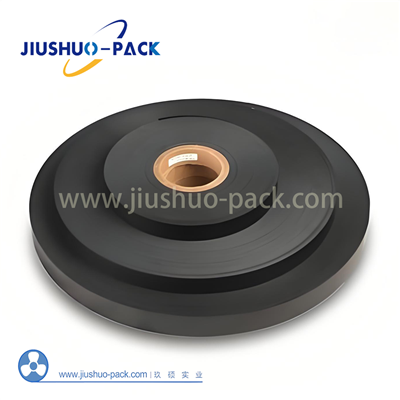
If you’re sourcing cover tape that meets the right peel strength for your parts, or if you want to talk through test methods specific to your carrier width or application, hit me up. We work with all kinds of electronics manufacturers, from small startups to big OEMs, and we’ll hook you up with samples and test data that fits your line’s needs. Don’t wait until your next batch has a peel failure—let’s get this right before you order.
Paper Carrier Tape References
- EIA Standard RS-468, “Packaging of Surface Mount Devices: Carrier Tape and Cover Tape”
- ASTM International Standard D3330/D3330M, “Test Method for Peel Adhesion of Pressure-Sensitive Tape”
- Nakamura, T., et al. “Adhesion Performance of Flexible Cover Tapes for Electronic Component Packaging,” Journal of Adhesion Science and Technology, vol. 28, no. 12, 2014, pp. 1121-1135.
Dongguan Jiushuo Industrial Co., Ltd.
As one of the most professional cover tape manufacturers and suppliers in China, we also support customized service. Please feel free to buy high quality cover tape made in China here from our factory. Contact us for more details.
Address: 11th Floor, Building 2, Chuangfu Center, Chashan Town, Dongguan City, Guangdong Province, China
E-mail: sales06@zaidaiw.com
WebSite: https://www.carriertape-pack.com/
