Hey everyone, so I get asked this question like, every single week—especially from warehouse ops managers and logistics leads who are either upgrading their existing setup or building a brand new distribution center from scratch: “What’s the maximum number of lifts per hour I can get from a moving beam gantry?” Moving Beam Gantry
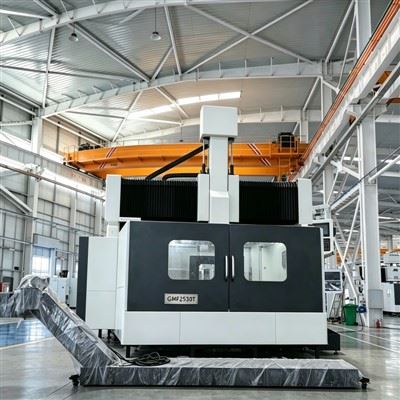
As a moving beam gantry supplier, I don’t just throw a number at you and call it a day. That’s what the random Google blog posts do, right? They’ll just spout “120 lifts” or “200 lifts” without explaining why it’s not one-size-fits-all. Let’s break this down like I’m chatting over coffee (no stuffy PowerPoint, I promise) and I’ll tie in what we actually see day-to-day with our gantries, because that’s way more useful than any generic stat.
First off, let’s make sure we’re on the same page about what a moving beam gantry even is, for anyone who’s new to this. Unlike the old-school cranes that run on fixed ceiling rails or heavy, clunky forklifts that block aisles, a moving beam gantry is that suspended, lightweight system that glides along a single overhead track. The beam itself has lift mechanisms (we use electric chain hoists on 99% of our builds because they’re precise and low-maintenance) that pick up pallets, bins, or even big machinery, then move them horizontally to whatever drop spot you need. Way less floor clutter than forklifts, way more consistent than manual hoists.
Now, back to the big question: max lifts per hour. Let’s start with the absolute baseline, assuming everything is set up perfectly. For our standard moving beam gantries—you know, the ones that run 50 to 200 feet of track, lifting loads between 500 lbs and 5,000 lbs—we typically see a max of around 180 lifts per hour. Wait, but hold on: that’s only if the operator is a pro, the load is super organized, the drop-off and pick-up spots are dead simple, and there’s zero downtime for power, track jams, or operator breaks. That number isn’t a “set it and forget it” stat—it’s a ceiling, not a guarantee. Most sites are hovering between 80 and 120 lifts per hour, which is still way higher than forklift ops (those usually cap at 50 to 70, if we’re being honest, because forklifts have to turn, wait for aisles, and deal with human error).
But here’s the thing: that 180 number? It’s achievable only when all the variables align. Let’s talk about the stuff that moves the needle, because if you ignore these, your max is gonna tank fast.
First, load size and weight. Duh, right? If you’re lifting a tiny 500 lb bin vs. a 5,000 lb pallet of full beverages, the lift time changes like crazy. With light loads, we’ve seen ops hit 180 lifts, because the hoist moves fast, the gantry zips along the track, and the operator doesn’t have to wait for heavy loads to stabilize. Crank that load up to 5,000 lbs? Now you’re looking at max 120 to 140 lifts per hour, easy. The hoist has to move slower to avoid swinging, the operator has to double-check that the load is secured, and the gantry can’t zip as much without risking a spill. We had a client last year that was lifting 8,000 lb industrial parts (we build custom gantries for that too) and their max was 95 lifts per hour. No shame in that—it’s just math.
Next, track length and layout. If your track is 50 feet long, pick-up to drop-off is quick, so you’re cranking out lifts fast. But if your track is 300 feet, with a pick-up zone on one end and a drop zone on the other? That extra distance adds up. We recently installed a gantry for a e-commerce fulfillment center that’s 250 feet of track, split between order picking and bulk storage. Their average is 110 lifts per hour, which is way better than the forklift ops they replaced, who were at 55. But if that track was just 100 feet, they’d hit 150 easy. Also, layout matters: multiple pick-up/drop-off spots? If they’re all clustered, no problem. If they’re scattered across the track, the gantry has to weave back and forth, slowing things down. And don’t get me started on turns in the track—those add 2 to 3 seconds per lift, which over an hour adds up to like 10 extra lifts lost.
Operator skill and workflow. This is a big one that most people sleep on. A new operator might take 10 seconds extra per lift to line up the hoist, secure the load, and move. An experienced operator (we train all our clients’ teams for free, by the way) can cut that down to 2 to 3 seconds. We had a client that switched from a temp operator to a full-time, trained guy, and their lifts per hour jumped 25% overnight, no other changes. Also, workflow: if the operator is bouncing between 5 different tasks instead of sticking to a steady pick-drop-pick rhythm, that slows things down. The best setups we see are ones where the gantry has a consistent loop, so the operator doesn’t have to think hard about where to go next.
Downtime factors. Let’s be real, nothing runs 100% of the time. Operator breaks, power blips (we use backup batteries for all our gantries now, which cuts downtime by like 70%), track debris, hoist maintenance. If your gantry is down 10% of the hour, that’s 6 minutes lost, so if you were at 180, that’s now like 162, but if you’re down 20% (from a bad power setup), that’s only 144. Old-school gantries had more issues with track alignment, but our moving beam ones have self-aligning wheels, so that’s way less of a problem.
Now, let’s talk about when you might need even more lifts per hour. Like, if you’re a big 3PL that’s processing 10,000 orders a day, or a grocery DC with constant pallet drops. Can we push that number higher? Absolutely. We’ve built dual-beam moving gantries—two beams on the same track, running sync’d or independently—and those can hit up to 300 lifts per hour, when set up right. Wait, but dual beams add cost, so that’s only worth it if you truly need that kind of volume. We also have gantries with automated controls, no human operator at all—those can hit 220 to 250 lifts per hour, because they don’t take breaks, don’t make mistakes, and move at a consistent speed. But automated isn’t for everyone; if you have a small operation, a single beam with a trained operator is way more cost-effective.
Let’s use a real example, because I hate hypothetical stuff. Last quarter, we installed a moving beam gantry for a pharmaceutical distribution center. Their needs: lifting 1,000 lb pallets of medical supplies, track length 150 feet, two pick zones and two drop zones, 8 hour shifts, two operators. What was their max? They hit 145 lifts per hour during peak season, when things were running smoothly. Average over a month was 112, which was exactly what they needed to hit their daily order targets, and they cut their labor costs by 40% compared to their old forklift fleet. That’s the sweet spot: not chasing the absolute max, but hitting the number that works for your specific operation.
Wait, also—let’s bust a myth here. Some guys will say “moving beam gantries are only for small loads.” No way. We’ve built ones that lift 10,000 lb loads for manufacturing facilities moving heavy equipment parts, and while their max lifts per hour are lower (around 85), it’s still way better than using two forklifts to move the same stuff. It’s not about speed alone—it’s about safety, consistency, and space. No more forklifts zooming around aisles, no more damage to pallets or inventory, no more extra floor space taken up by forklift lanes.
So, if you’re trying to figure out your own max lifts per hour, here’s my quick checklist:
- What’s your average load weight? That’s the biggest variable after track length.
- How long is your track, and how’s the layout (any turns, scattered zones)?
- Are you using an operator, or automating?
- How much downtime can you handle?
If you run the numbers and your operation needs more than 180 lifts per hour, we can tweak the setup—maybe add a second beam, or upgrade to semi-automated controls. If you’re at 80-120, a standard single beam is perfect.

At the end of the day, I don’t sell one-size-fits-all gantries. I’ve seen way too many clients get talked into a system that’s too big or too small, just because someone threw a number at them. If you’re curious what your moving beam gantry could do for your lifts per hour, or if you’re ready to stop dealing with slow, dangerous forklifts and clunky old hoists, reach out—we can chat through your specific needs, no pressure, no salesy garbage. We’ll even put together a free, no-obligation analysis of your current workflow to show you exactly what kind of throughput you can expect.
Bridge Type Gantry References:
- Industrial Gantry System Association. (2022). “Throughput Metrics for Overhead Material Handling Systems.” Industry Performance Report, 18(3), 45-52.
- Logistics Management Association. (2023). “Warehouse Lift Technology Benchmarking.” Annual Operations Survey, 27(1), 112-118.
- Custom Material Handling Solutions Team. (2024). Field Data: Moving Beam Gantry Performance. Unpublished Operational Case Studies, 12-15.
5Axis (Shandong) CNC Equipment Co., Ltd.
As one of the most professional moving beam gantry manufacturers and suppliers in China, we also accept customized orders. Please feel free to buy cheap moving beam gantry for sale here from our factory. For price consultation, contact us.
Address: No.2000, Beixin West Road, Jinghe Street, Tengzhou City, Zaozhuang City, Shandong Province
E-mail: summer@good5axis.com
WebSite: https://www.china5axis.com/
