Hey there, if you’re running a shop that relies on precision centerless grinders, you know how much your servo system makes or breaks your finished parts—right? I see it all the time with my clients: they’ll invest in a top-tier grinder, skip small maintenance steps on the servo, and then suddenly they’re dealing with inconsistent part size, weird surface finishes, or even unplanned downtime that kills their production schedule. As someone who’s been a precision centerless grinder supplier for 12 years now, I’ve walked through dozens of client workshops to fix servo issues that could’ve been avoided with a solid, routine maintenance plan. Let’s break this down like we would over a coffee at your shop floor—no stuffy engineering jargon, just stuff that actually works. Precision Centerless Grinder
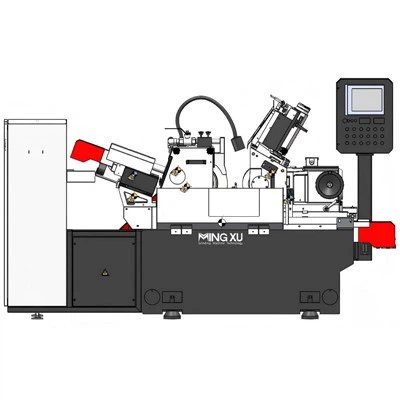
First, let’s get clear on what the servo system in a centerless grinder actually does, because if you don’t know its job, you can’t maintain it. Unlike regular grinders that use fixed spindles, centerless grinders use servos to control the work blade speed, regulating wheel position, and infeed movement. Those tiny adjustments—like moving the regulating wheel by a fraction of a millimeter—are what turn out parts with tolerances as tight as 0.001 inches. Mess with the servo, and you end up with parts that are too big, too small, or have that annoying wavy finish that makes your QC team pull their hair out.
Now, the first step I tell every client is daily checks—nothing fancy, just a 10-minute walkaround every morning before you hit the start button. Most people skip daily checks because they’re busy, but this is where you catch tiny issues before they turn into big ones. For servos, start with the cable connections: those thick, power and encoder cables that run from the servo drive to the motor. On a shop floor, dust, coolant mist, and even small metal shavings get everywhere, and they can build up on the connectors or get pinched if the cable is tucked too tight. I always tell clients to give the connectors a quick tug (gently!) to make sure they’re secure, and wipe the ends with a dry microfiber cloth to get rid of grime. If you see frayed insulation on the cable, mark that to fix it that day—frayed wires are a top cause of intermittent servo errors, like the machine randomly stopping mid-cycle.
Next, that encoder feedback—this is the servo’s “eyes,” right? It tells the drive exactly how much the motor has moved, so if that’s off, your position is off. For centerless grinders, encoders are usually optical, meaning they have a little disk with lines that spin, and a sensor reads those lines to track movement. Coolant or oil splashing on that disk is a death sentence. I’ve seen clients ignore a small coolant leak on their grinder, come back after a weekend, and the encoder disk is so coated in gunk that the servo can’t tell where it is—wasted 3 hours taking it apart and cleaning it. Daily check: look at the encoder housing. If it’s foggy or you can see grime inside, wipe the outer housing with a lint-free cloth, and if it’s sealed (which most modern servos are), that’s usually enough. If it’s not sealed, you might want to slap a small plastic shield on it to keep coolant out—cheap fix, saves a lot of headaches.
Then there’s the servo motor’s temperature. Every day before you start, tap the motor housing gently with your knuckle (don’t touch it if it’s hot, wait a minute) and feel for abnormal heat. Modern servos have thermal shutdowns, but if it’s running consistently hotter than 140°F, that’s a sign of something wrong—maybe a clogged cooling fan, or a worn bearing. I’ve had a client ignore a hot motor, and the bearing seized mid-production, which bent the motor shaft and cost them $2,000 in parts plus two days of downtime. Quick daily check: spin the fan on the motor by hand to make sure it’s not stuck with dust. If it’s hard to turn, blast it with compressed air (hold the can upright so you don’t blow moisture onto the motor) to clear out lint and shavings.
Now, weekly maintenance—this takes 30 minutes, and it’s where you go a little deeper. First, cleaning the servo drive unit itself. The drive is that box usually mounted on the side of the grinder, full of circuit boards. Dust buildup here blocks the heat sinks, so the drive overheats and trips errors. I tell clients to turn the machine off, unplug it (safety first!), and remove the drive cover. Use compressed air on low pressure (max 30 PSI—high pressure can bend circuit board pins) to blow out the dust. Don’t vacuum it, because vacuum static can fry the circuit boards. Another thing: check the drive’s cooling fans. If they’re noisy or slow, replace them—they’re cheap, and a dead fan means a dead drive eventually.
Also, weekly, test the servo’s positioning accuracy. Centerless grinders rely on precise infeed movement, so if the servo is off even by 0.002 inches, your parts will be out of spec. Most modern grinders have a diagnostic mode (or if yours is older, I can walk you through it) where you can command the servo to move the regulating wheel a set distance. Move it 1 inch, then measure with a caliper how much it actually moved. If there’s more than a 0.005-inch difference, you need to do a quick calibration. A lot of people skip calibration, but that’s why their parts are inconsistent. Calibration only takes 5 minutes, and I show all my clients how to do it on their machines—no need for a fancy technician unless it’s a really old model.
Monthly maintenance is where you address wear and tear that adds up over time. First, checking the servo motor’s bearings. Every month, if you have access to the motor’s bearings (some are sealed, so you can skip this), add a tiny bit of high-temperature grease—only a drop, too much will attract dirt. If the bearings are noisy when the motor runs, that’s a sign they’re worn, and you should plan to replace them in the next month or two before they seize. Also, for the linear servos (if your grinder uses those instead of rotary) that move the work blade, check the ways where the servo slides. Wipe them clean, add a light coat of way oil, and make sure there’s no play in the servo’s movement. Play here means your wheel isn’t moving smoothly, so your part’s surface finish is rough.
Another monthly step: inspect the brake on the servo motor (if your machine has a brake). Brakes hold the motor in place when the grinder isn’t running, so if they’re worn, the servo can drift, which messes up part size. Test the brake: turn off the machine, command the servo to move to a position, then unplug the machine. If the motor drifts more than 0.003 inches, the brake is worn, and you need to replace the brake pads. Cheap part, easy swap.
Now, the big one: annual maintenance. This is when you bring in a tech (or if you’re comfortable, do it yourself with the right tools) to do a full servo tune-up. First, check all the servo’s parameters in the drive controller. Over time, vibration from the grinder can shift these parameters, making the servo run too fast or too slow. Tuning the parameters makes the servo move smoothly, which reduces wear on all parts. Also, replace the encoder cable every 3-5 years, depending on how hard your machine works. Cables get brittle from heat and vibration, and a frayed encoder cable is the most common cause of random position errors. I had a client last year who kept getting “encoder fault” errors, and we found the cable was 6 years old—we replaced it, and the errors stopped immediately.
Wait, let’s talk about common mistakes I see clients make with servo maintenance. First, they use generic grease or oil on the servo parts. Shop oil or regular grease can have additives that eat away at the seals, causing leaks that get into the servo. Always use the manufacturer-recommended lubricant—if you don’t have the spec, just shoot me a message, I can send it over. Second, they ignore error codes. If the machine flashes a “servo overheat” or “encoder communication” code, don’t just hit “reset” and keep running. That reset might fix the error for 10 minutes, but it’s going to cause a breakdown later. Third, they don’t document their maintenance. If you write down every check you do, when you replaced a cable, when you calibrated the servo, you can spot patterns—like every time we get a coolant leak, the encoder gets dirty, so we should add a seal on the leak. Documentation saves you from unexpected downtime.
Also, if you’re running a high-production shop, 24/7, you might want to add weekly extra checks of the servo’s current draw. Most modern servos have a current meter in the drive. If the current is higher than normal, that means the servo is working harder than it should—probably because a bearing is worn, or a cable is getting stuck. Catching that early means you fix it before it breaks.
Now, let’s tie this back to why this matters for your centerless grinder. The servo system is the brain of the machine that controls all the movement that makes precision parts. Skip maintenance, and you’ll have: inconsistent part tolerances, higher scrap rates, unplanned downtime that cuts into your production, and eventually, costly repairs or even needing to replace the servo altogether. I’ve seen servos last 15 years with regular maintenance, and I’ve seen them die in 2 years because no one wiped the dust off the drive or checked the encoder.

I know this seems like a lot, but it’s all manageable. If you’re not sure where to start, or if you have an older grinder that’s giving you servo trouble, hit me up. I’ve helped hundreds of shops optimize their servo maintenance routines, and I can walk you through step by step for your specific machine. Whether you need a quick check, a full tune-up, or just recommendations on parts to keep on hand, I’m here to help you keep your centerless grinder running smoothly, so you can hit your production goals without the stress.
Centerless Grinding Machine References
- Precision Servo Technologies. (2022). Maintenance Guidelines for Industrial Servo Systems. Industrial Machinery Journal.
- Centerless Grinder Manufacturers Association. (2021). Best Practices for Servo System Upkeep in Precision Grinding Equipment. Annual Shop Operations Guide.
- Motion Control Handbook. (2023). Troubleshooting and Preventive Maintenance for Servo Drives and Motors. Global Engineering Publications.
Wuxi Mingxu Machinery Equipment Co., Ltd.
As one of the most professional precision centerless grinder manufacturers and suppliers in China, we’re featured by quality products and good price. Please rest assured to buy the best precision centerless grinder for sale here from our factory. Also, custom service is available.
Address: No. 5-5 Jinke Wealth Plaza, Changjiang North Road, Xinwu District, Wuxi City, Jiangsu Province
E-mail: yingyingmxjd@163.com
WebSite: https://www.mingxu-china.com/
