Hey there, if you’ve ever spent half a Saturday under your truck’s hood, tightening bolts just to have one work itself loose mid-drive, or stared at a construction site where a whole crane boom wobbles like it’s gonna fall apart because of a single missing lock, you get why vibration-resistant hex bolts aren’t just another hardware gimmick. As a hex bolt supplier who’s dealt with way too many frustrated folks calling to replace bolts that shook loose in 6 months or less, let me break this down like I would over a coffee—no jargon, no fancy charts, just the real stuff on how these things actually work. Hex Bolt
First off, let’s get one thing straight: regular hex bolts don’t stand a chance against constant vibration. Think about it—vibration isn’t just a little shake; it’s tiny, repeated forces that work like a wedge prying two parts apart, little by little. Every time your car hits a pothole, a factory machine hums 24/7, or a wind turbine blades spin all night, those small back-and-forth movements loosen a regular bolt’s threads, no matter how tight you think you turned it. You might torque it to spec, leave it, and come back months later to find it’s spun half a turn out. Annoying, right? That’s where vibration-resistant hex bolts come in—they’re built to fight that specific shake.
Now, how do they pull off what regular bolts can’t? Let’s run through the most common types, since not all vibration-resistant bolts are made the same, and I see way too many people mix ’em up.
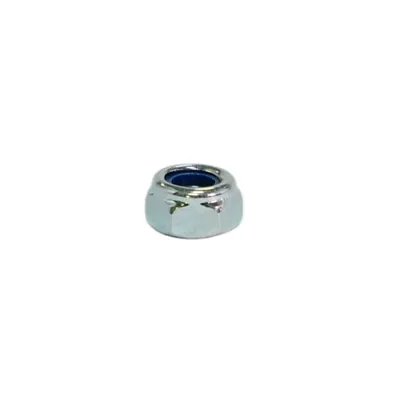
First up, the prevailing torque type—this is probably the one you’ll see most often on construction sites and in automotive repair shops. The trick here is they don’t rely just on the nut tightening down; the bolt’s threads have a little twist to ’em, or there’s a patch of nylon (sometimes called a nyloc patch) fused to the nut’s internal threads. Wait, hold up—sometimes people call these “lock bolts” but they’re a subset of vibration-resistant hex bolts. Here’s how it works: when you screw the nut onto the nylon-patched bolt, the nylon compresses. It’s not a rigid clamp—so it still lets you tighten it like normal—but once it’s seated, the nylon pushes back against the bolt’s threads. That creates constant, tiny friction between the bolt and nut, not just at the tight point. So when vibration tries to spin the nut loose, that friction is enough to hold it in place. I’ve had guys swear by these for their trailer hitch bolts, even after hauling 10,000 pounds cross-country. The downside? If you over-torque them, you can tear the nylon patch, and they stop working. Also, they’re not great for super high-temperature applications, like near engine exhaust, because nylon melts. Got a customer last year who swapped out nylon bolts for something else on a dump truck, since their exhaust side got too hot and the nylon turned to goop.
Next, there’s the thread-deforming vibration-resistant hex bolts—these are the ones with a little deformed area on the bolt’s thread, not the nylon. Usually, it’s a small section where the thread is squeezed a tiny bit, slightly out of shape, right near the end of the bolt. So when you thread the nut on, it doesn’t just slide over smooth threads; it has to stretch or bend to fit that deformed spot. That again creates that constant, prevailing torque we talked about, just without the nylon. These are way better for high temps, no goop to melt, and they’re reusable, unlike nylock ones (once you take ’em off, the nylon’s stretched and won’t hold as tight next time). I keep these in stock for HVAC techs all the time—they deal with rooftop units that vibrate nonstop, and these bolts hold up way longer than nylon ones out in the sun.
Wait, another big one I can’t skip: the spring-loaded or split washer-style vibration-resistant bolts. No, not your basic split ring washers—those are useless against vibration. These have a built-in, spring-loaded flange under the bolt head, or a split section that’s not just a flat washer. When you tighten the bolt, that spring compresses, creating a constant upward force between the bolt head and the part it’s clamping. That force means there’s always pressure between the threads, so vibration can’t separate them like it does with a regular bolt that just “settles” into place. I work with a bridge construction crew that swears by these for the bolts connecting steel beams—they say even after a year of wind and traffic, they barely have to check the torque.
But here’s the thing a lot of beginners miss: no vibration-resistant bolt is a “set it and forget it” fix. I get calls all the time from guys saying “your bolts are garbage, they came loose” and when I ask, they tell me they used a regular nut with a vibration-resistant bolt, or they torqued it way too loose. Wait, no—vibration-resistant hex bolts aren’t magic; they work best when paired with a proper, matching nut. If you take a nylon-patched bolt and pair it with a regular steel nut, you’re basically wasting your money. The nylon needs the right material from the nut to create that friction. Same with the deformed thread bolts—they need a standard hex nut, but the threads have to align right so the deformed spot does its job.
Let’s also talk about why regular bolts fail specifically, to put this in perspective. When two metal parts are clamped together with a regular bolt, the only thing holding them is the friction from the torque you applied. Vibration causes micro-movements—like, the parts shift a tiny fraction of a millimeter every time something shakes. Over time, that movement wears down the thread peaks on both the bolt and nut, until there’s not enough friction left, and the nut spins free. Vibration-resistant bolts stop that by either adding that constant friction (nylon, deformed threads) or that constant clamping force (spring washers) so those micro-movements can’t happen in the first place. It’s like putting non-slip pads under your rug—you don’t need the rug to be super tight, you just need something to stop it from sliding when you walk on it.
As a bolt supplier, I’ve seen this play out so many times. Last year, a local factory reached out because their conveyor belt bolts were coming loose every 3 weeks, costing them thousands in downtime. They were using regular hex bolts, no lock anything. I recommended they switch to deformed-thread vibration-resistant hex bolts, paired with grade 8 nuts. Three months later, they called back saying they hadn’t tightened a single bolt since, and saved over $2,000 in repairs. That’s the stuff that makes my job worth it—when a simple bolt swap solves a huge headache.
Another common question I get: can I reuse vibration-resistant hex bolts? The answer depends on the type. Nylon-patched ones, like I said, work once—take the nut off, the nylon’s stretched out, and it won’t create the same friction next time. Deformed thread bolts? You can reuse them a few times, but only if the deformed thread isn’t damaged during removal. Spring-loaded ones are usually reusable, as long as the spring isn’t crushed or rusted. I always tell customers to label which ones are which so they don’t accidentally reuse a nylon bolt and wonder why it starts slipping.
Wait, also, let’s bust a myth real quick: I hear people say “just use locktight instead of vibration-resistant bolts.” Yeah, locktight works, but it’s a temporary fix for most people. It’s messy, it’s hard to remove if you need to fix something, and if you apply too much or too little, it doesn’t work right. Vibration-resistant hex bolts are a permanent (or at least long-lasting) solution that works with the bolt itself, not a chemical coating. Plus, locktight can break down in cold temps or high heat, same as nylon patches. I don’t knock using locktight, but it’s not a replacement for the right vibration-resistant bolt for the job.
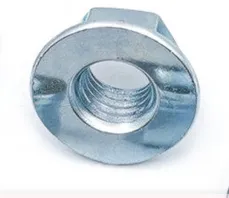
What about heavy-duty applications? Like wind turbine towers or mining equipment? Those need even more rugged vibration-resistant bolts. We supply a line of bolts with a serrated flange under the head, not just a spring—those tiny serrations dig into the metal part, so there’s zero movement between the bolt head and the material. Combine that with a deformed thread, and those bolts can handle the constant vibration of a wind turbine blade spinning 20 hours a day, or a mining drill shaking 24/7. We did a bulk order last year for a wind farm in West Texas, and their maintenance team told us they only check those bolts once a year, versus every month for the old regular ones.
Here’s a pro tip I give every customer, no matter what kind of bolt you’re using: always check your torque specs, even with vibration-resistant bolts. If you don’t tighten it to the right torque, even the best vibration-resistant bolt will come loose. For example, a nylock bolt needs to be torqued to the same spec as a regular bolt for the same application—too loose, and the nylon can’t create enough friction; too tight, and you strip the threads or tear the nylon. I keep a little torque cheat sheet in my shop for common uses, so customers can grab it when they call in an order.
Look, I get it—bolts feel like a tiny, unimportant part of whatever project or repair you’re doing. But anyone who’s dealt with downtime, loose parts, or safety issues knows better. A vibration-resistant hex bolt isn’t just another part number in my catalog—it’s a solution to a problem that’s plagued mechanics, builders, and factory owners for decades.
If you’re tired of bolts that shake loose, whether it’s for your trailer, your truck, a home repair, or a big construction job, I can hook you up with the right vibration-resistant hex bolts for your specific needs. We carry all the types I talked about—nylon-patched, deformed thread, spring-loaded, serrated flange—plus different grades and sizes for every application. Just reach out, tell me what you’re working on, and I’ll help you pick what works, no sales pitch, no overcomplicating it.
Hex Long Nut References
- Shigley, J.E., Mischke, C.R., & Budynas, R.G. (2004). Mechanical Engineering Design (7th ed.). McGraw-Hill.
- VDI 2230: Systematic Calculation of High Duty Bolted Joints. Verein Deutscher Ingenieure, 2014.
- Hunter, S. C. (1961). "Threaded Fasteners Under Vibration". Journal of Mechanical Design, 83(2), 105–112.
- Nylock Fastener Technology. (2022). Industry Standard Performance Guidelines for Prevailing Torque Locking Fasteners. Fastener Technology Association.
Jiaxing Jinling Hardware Technolgy Joint Stock Co., Ltd.
As one of the most experienced hex bolt manufacturers and suppliers in China, we also support customized service. Please feel free to buy bulk high-grade hex bolt made in China here from our factory. For quotation and price list, contact us now.
Address: No.32, Shenjiadai, Xuyouche Village, Qinshan Subdistrict, Haiyan County, Zhejiang Province, China
E-mail: jlzxl@jinlingfstn.com
WebSite: https://www.china-nut-factory.com/
