Hey folks, let’s cut to the chase today: if you work in packaging, printing, textiles, or even paper products, you’ve probably run into a messy mid-shift roadblock—like a big roll of material that’s too wide for your downstream equipment, or slitted edges that are ragged enough to jam a whole production line. The machine that fixes that? That’s an automatic slitter rewinding machine, and if you’re in the market for one, I’m on the side that knows exactly how they work, what makes them worth it, and why they’re not just a “nice-to-have” for your shop floor. Rewinding Machine
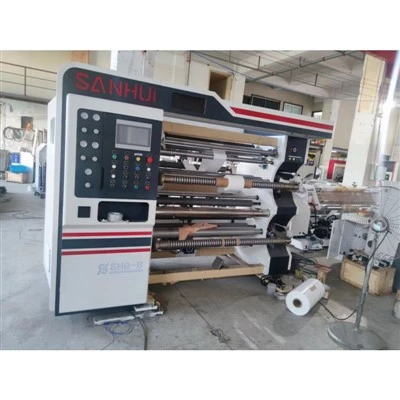
First off, let’s break down what it actually does, no jargon. Think of a slitter rewinder as the middleman between a master roll (that huge, bulk roll of material you get from your supplier—could be plastic film, label stock, fabric, paper, even aluminum foil) and the tiny, ready-to-use rolls your packaging machines or label printers need. Instead of you manually unrolling the big roll, slicing it into narrower strips with scissors, and rewinding each roll by hand (I’ve seen shops try this, and it’s basically a recipe for back injuries and wasted material), this machine does it all automatically. That’s why it’s called “automatic”—no need for a person to stand there for every roll, just set a few parameters, hit go, and it handles the rest.
Now, let’s get into the science part, keep it real. A standard slitter rewinder has three main parts that work in sync: the unwind station, the slitting assembly, and the rewind station. The unwind station holds that big master roll, and it’s designed to feed material smoothly without stretching it—super important, because if you pull a label roll too tight, the adhesive weakens, and your labels won’t stick right. The slitting assembly is where the magic happens: it uses blades, usually either circular razor blades (for thin stuff like film or paper) or shear blades (for thicker materials like heavy fabric or foil) to slice the master roll into precise, uniform widths. Then the rewind station takes those slitted strips and wraps them onto new cores, adjusting tension on the fly to make sure each new roll is tight, no loose ends, no uneven bulges that’ll jam a machine later.
Wait, why “automatic” matters here? Older, manual slitters required you to stop every 10 or 15 minutes to reload rolls, adjust blade spacing, or fix a misaligned strip. Automatic models have sensors (yeah, sensors, not rocket science) that track roll thickness, tension, and even edge quality. If a strip gets too thin, or a blade gets dull, the machine will slow down or alert you instead of ruining an entire batch of material. For a shop that runs 12-hour shifts, that’s a game-changer—you can run more rolls with less labor, and waste goes way down. Let me throw a number at you: I’ve seen a customer who switched from manual to automatic slitters cut material waste by 12% in the first month, and their production output jumped 20% because they weren’t stopping every 20 minutes.
Now, who actually uses these? Let’s name a few industries so you can see if it applies to you. Packaging companies? They turn big plastic film rolls into the narrow rolls needed for snack bags, soda labels, or shipping envelopes. Label printers? They use slitters to cut label stock into the exact widths for beer labels, cosmetic labels, whatever. Textile manufacturers? Slit wide fabric rolls into strips for clothing seams, bedding, or even upholstery. Even the battery industry uses them to cut thin copper or aluminum foils for electric vehicle batteries—super precise, no mistakes allowed there. If your business deals with any kind of roll stock that needs to be made smaller, this machine is your new workhorse.
Let’s talk about what to look for when you’re shopping for one, because not all automatic slitters are created equal. First, material compatibility: if you’re working with thick, rigid foil, a slitter built for thin paper won’t cut it (pun very intended). Look for adjustable blade systems and tension controls that can handle your specific material. Then, speed: if you’re running high-volume shifts, a faster machine saves money, but don’t skip quality—some cheap fast slitters leave ragged edges, which leads to more waste and jams. Another big one is core size: the new rolls you make have to fit your downstream equipment, so make sure the slitter lets you swap cores easily for different sizes. Oh, and maintenance: look for machines with replaceable blades and easy access to parts—nothing’s worse than a machine down for three days waiting for a specialized blade.
Wait, let’s get real about the cost side, because I know that’s on your mind. A good automatic slitter isn’t cheap—they range from, honestly, a few thousand for smaller entry-level models all the way up to six figures for industrial high-volume ones. But here’s the catch: if you’re doing manual slitting, you’re wasting labor, wasting material, and losing out on production time. Let’s say you have two people spending 8 hours a day slitting rolls, making $15 an hour each. That’s $240 a day in labor, plus 10-15% waste. A slitter pays for itself in a few months if you’re running even moderate volume. I’ve had customers who invested in a mid-range model and recouped the cost in 4 months flat—no joke.
Now, a few common myths I hear all the time, let’s bust those. Myth #1: “Automatic slitters are too complicated for small shops.” Nah, modern ones have touchscreens, pre-set profiles for common materials, so even a new employee can learn to run it in a day. Myth #2: “They only work for big companies.” Entry-level automatic models are made for small to medium shops—if you’re running a 10-hour shift a day, they’re perfect. Myth #3: “Slitters are just for cutting rolls.” No, the rewinding part is just as important. If you rewound those slitted strips with too little tension, the rolls will be loose and unmanageable; too much, and they’ll crumple. Good automatic slitters sync slitting and rewinding so that part’s handled right.
What about my side? I’m a rewinding machine supplier, so I don’t just sell machines—I’ve seen first-hand what they can do for a shop that’s tired of mid-shift headaches. I don’t push fancy, overpriced models if a small entry-level one will fit your needs. I work with you to figure out what material you’re running, how much volume you need, so you don’t end up with a machine that’s either too slow or too big for your space. Most of my customers tell me the biggest win isn’t just more production—it’s less frustration on the shop floor. No more yelling over a misaligned roll, no more throwing away a whole batch because of a bad cut.
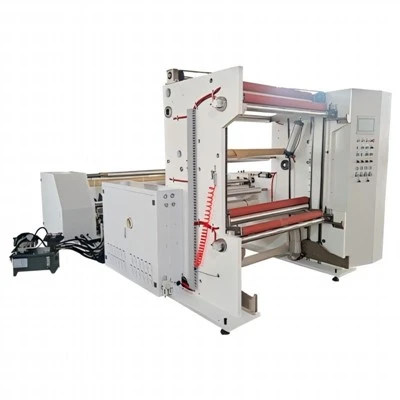
At the end of the day, if your business is dealing with roll stock, an automatic slitter rewinding machine isn’t a luxury—it’s a way to make your operation smoother, cheaper, and less stressful. If you’re thinking about upgrading, or even just curious about what would work for your shop, reach out to talk through what you need. I’m here to help, no hard sells, just honest info on what’ll actually make your job easier.
Foil Rewinding Machine References:
- "Slitting and Rewinding Technology for Flexible Packaging." Institute of Packaging Professionals, 2022.
- "Automated Slitting Solutions for Textile and Nonwoven Industries." Textile Industries Association, 2023.
- "Material Processing Equipment: Efficiency Gains in Roll Stock Conversion." Manufacturing Extension Partnership, 2021.
Wenzhou Sanhui Machinery Manufacturing Co., Ltd.
Wenzhou Sanhui Machinery Manufacturing Co., Ltd. is one of the most professional rewinding machine manufacturers and suppliers in China. We have world-leading production equipment and strong manufacturing capabilities. Please feel free to wholesale advanced rewinding machine made in China here from our factory. Customized orders are welcome.
Address: B17-8, Mechanical Industry Park, Wanquan Light Industry Production Base, Wanquan Town, Pingyang County, Wenzhou City, Zhejiang Province
E-mail: sanhui.slittingmachine@gmail.com
WebSite: https://www.sanhuislittingmachine.com/
