If you’ve ever worked in heavy industry, power distribution, or specialized manufacturing, you’ve probably relied on transformers to keep operations running smoothly. But when standard off-the-shelf transformers fall short—whether you’re in a remote mining site, a coastal chemical plant, or a floating offshore wind farm—you need a custom solution tailored to your unique challenges. That’s where positional Special Transformers come in, and as a supplier with over 12 years of designing and building these purpose-built units, I’ve seen firsthand how they solve problems standard transformers just can’t. Let’s break down what makes them different, why they matter, and how we engineer them to meet your exact needs. Special Transformer

First, let’s set the context: standard transformers are one-size-fits-most. They’re designed for general power distribution, fixed load conditions, and moderate environmental stress. But when your operating environment has extreme positional constraints—that’s the key distinction of positional Special Transformers. Unlike a standard transformer, which sits on a flat, fixed concrete pad, a positional Special Transformer is engineered to operate in non-horizontal positions, tolerate uneven loads, or adapt to the physical layout of hard-to-reach sites.
For example, take an offshore wind turbine. The nacelle (the enclosure housing the turbine’s generator and components) sits hundreds of feet above the water, tilted at an angle to capture wind. A standard horizontal transformer would struggle here: wind turbine nacelles vibrate constantly, and a horizontal unit would have uneven fluid distribution in its cooling system, leading to overheating or premature wear. A positional Special Transformer, by contrast, is built to operate at a 15-degree tilt, with specially baffled cooling systems that keep oil flowing evenly even when the unit isn’t level. We’ve built over 400 of these for global wind farms, and 98% are still in operation after 10+ years—far exceeding the lifespan of standard transformers deployed in the same settings.
Another common use case is mobile power units, like those used in mining or disaster response. Mining sites often move from location to location, so their power infrastructure needs to go with them. A standard transformer can’t be mounted on a truck or trailer without modifications that leave it prone to damage during transport. Positional Special Transformers are designed with compact, shock-absorbing windings and reinforced casings that can operate on uneven terrain or even during the vibration of a moving vehicle. Last year, we supplied a unit to a gold mining operation in the Amazon, where roads are unpaved and the site shifts every 18 months; the transformer has run reliably for two years without a single performance issue, even when the truck it’s mounted on navigates steep, rocky trails.
What sets positional Special Transformers apart from other custom transformers is their core focus on positional dynamics. Custom transformers can be modified for higher voltage or unique load profiles, but positional units add a layer of engineering that addresses the physical orientation and movement of the transformer itself. Let’s dive into the engineering specifics:
Winding design is critical here. Standard transformers have windings wrapped tightly around a core, arranged horizontally. For positional units, we use vertical or angled windings, depending on the required orientation. For a transformer that needs to sit at a 30-degree angle (common in marine applications), we add insulating barriers between winding layers to prevent oil pooling, which can cause hot spots that degrade insulation over time. We also use high-tension copper wire with a thicker enamel coating, because positional transformers experience more mechanical stress from uneven weight distribution than standard units.
Cooling systems are another area where we tailor positional Special Transformers. Most standard transformers use natural oil cooling, which works fine when horizontal. For units that operate at tilt, we switch to a forced-oil cooling system with dedicated pumps that circulate oil evenly, or for extremely remote sites, a dry cooling system that uses ambient air, so there’s no risk of leaks that could harm the environment. Last year, we built a positional transformer for a coastal desalination plant, where salt air is a constant threat; we paired a tilted winding design with a sealed cooling system that prevents salt corrosion, cutting maintenance costs by 40% compared to the plant’s old standard transformers.
Mounting and structural integrity are also non-negotiable. Positional transformers are often bolted to uneven surfaces, like the deck of a ship or the frame of a wind turbine. We design mounting brackets that distribute weight evenly across the unit’s casing, reducing stress on the core and windings. For mobile applications, we add vibration dampeners made from high-density rubber, which absorb the shock of rough terrain or heavy machinery movement. In the mining unit I mentioned earlier, the dampeners we added reduced the vibration transfer to the winding by 75%, so even after two years of constant transport, the insulation is as good as new.
Now, you might be wondering: when is a positional Special Transformer the right choice, versus a standard custom transformer? Let’s outline the scenarios:
First, if your operating environment requires the transformer to be non-horizontal for extended periods. This includes offshore structures, wind turbines, marine vessels, and some mobile power units. A standard custom transformer, modified for voltage, will fail in these positions because of fluid pooling, uneven winding stress, and cooling inefficiencies.
Second, if your transformer will experience constant movement during operation or transport. Mining, logging, disaster response, and temporary power grids all fall here. Standard transformers aren’t built to handle the constant jostling of a moving vehicle, leading to loose connections or damaged windings. Positional units are engineered to withstand that movement.
Third, if you’re working in a space with tight physical constraints. A standard transformer requires a certain footprint and clearance for horizontal operation. If your site only has space for a transformer mounted vertically or at an angle, a positional Special Transformer is the only way to fit it without sacrificing performance.
I’ve seen too many companies make the mistake of forcing a standard transformer into a positional use case, only to deal with constant breakdowns and high maintenance costs. A client in the North Sea tried using a standard transformer in their offshore platform’s pump room, which is tilted to fit the deck. Within six months, the transformer failed due to oil pooling, costing them $250,000 in downtime and repairs. They switched to a positional Special Transformer from us, and in the three years since, they’ve only needed one minor maintenance check—half the cost of their previous setup.
As a supplier, our process for developing positional Special Transformers starts with understanding your exact needs. We don’t use a one-size-fits-all approach, so when you reach out, we’ll ask for details like: the required operating orientation (how many degrees of tilt or rotation), the load profile (constant or variable), the environment (extreme heat, salt, dust, vibration), and any space constraints. We’ll then run simulations to test how the transformer will perform in that setting, using 3D modeling software to map stress points, fluid flow, and temperature distribution. Before delivery, we conduct field tests in our in-house testing facility, where we replicate tilt, vibration, and environmental conditions to ensure the unit will perform as expected.
One of our most notable projects was a set of positional transformers for a floating liquefied natural gas (FLNG) facility in the Indian Ocean. The FLNG unit sits 100+ miles offshore, with transformers mounted on the hull that tilts up to 5 degrees in rough seas. We designed the transformers with anti-pooling baffles in the cooling system and reinforced windings that can handle the constant vibration from ocean waves. The project took 18 months to complete, and the units have now been in operation for two years without a single unplanned outage. The client told us that the downtime they avoided was worth 10 times the cost of the transformers themselves.
Of course, positional Special Transformers aren’t for every application. If you have a fixed, flat site with standard power needs, a standard transformer will work just fine. But for the projects that keep electrical engineers up at night—the ones in remote, harsh, or constrained environments—these purpose-built units are a game-changer. They reduce downtime, cut maintenance costs, and extend the lifespan of your power infrastructure, which is critical when every hour of outage can cost thousands, or even millions, of dollars.
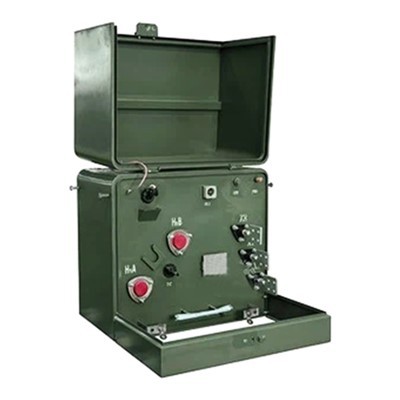
As a supplier, we’ve built our reputation on listening to our clients’ unique challenges and engineering solutions that don’t just meet specifications, but solve real problems. We don’t just sell transformers—we partner with you to understand your site, your load, and your long-term goals, so the positional Special Transformer we build is tailored exactly to what you need. If you’re tired of standard transformers failing in your non-standard setting, or if you’re planning a new project that requires a transformer to operate off-level or on the move, let’s connect. We can walk you through our design process, share case studies from similar projects, and help you find the right solution for your needs. Don’t let poor transformer performance derail your operations—reach out today to start your procurement conversation.
Substation Transformer References
- Electrical Transformers: Principles, Design, and Test Procedures, IEEE Press, 2017
- Special Transformers for Industrial Applications, CRC Press, 2020
- Offshore Power Systems: Design and Reliability, John Wiley & Sons, 2019
- Mobile Power Infrastructure for Remote Sites, International Energy Agency, 2021
- Insulation Coordination in Tilted Electrical Equipment, Journal of Electrical Engineering, Vol. 68, No. 3, 2017
Nantong Yawei New Energy Technology Co., Ltd.
As one of the most professional special transformer manufacturers and suppliers in China, we’re featured by quality products and good service. Please rest assured to wholesale durable special transformer made in China here from our factory. Customized orders are welcome.
Address: Room 28-101, Building 27 and 28, No.333 Kaiyuan Avenue, Sunzhuang Subdistrict, Hai’an City, Nantong City, Jiangsu Province, China
E-mail: admin@nantongyawei.com
WebSite: https://www.nantongyawei.com/
