Hey everyone, thanks for popping in to my corner of the internet. I run an industrial robot supply company, and I get asked this question at least three times a day: “What’s the cost of a 6-axis industrial robot?” It’s not a one-word answer, I’ll tell you that right off the bat. A lot of folks new to automation think it’s just the price tag on the robot arm itself, but let me tell you—there’s way more that goes into the total cost. Today, I’m breaking it all down, straight up, no sales fluff. Industrial Robot
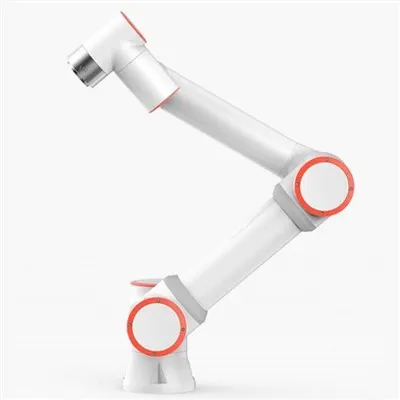
First off, let’s get the basics: a 6-axis robot is the standard workhorse for manufacturing. It has six joints that let it move like a human arm—twisting, bending, reaching all over. That’s why it’s used for everything from welding parts on car lines to picking boxes in warehouses, from assembling tiny electronics to handling heavy metal castings. So when someone asks “how much?”, I start with the baseline. The cheapest 6-axis bots you’ll find (think entry-level, small payload, like 3-5 kg) start around $15,000 to $25,000. But wait—if you need a mid-range one, say for welding or pick-and-place of heavier stuff (10-20 kg), that jumps to $25,000 to $50,000. And if you’re going heavy-duty—payloads over 50 kg, like moving big automotive frames or construction parts? We’re talking $50,000 to $150,000, sometimes even more for super specialized, high-speed models.
But here’s the thing: that arm price is just the tip of the iceberg. Most first-time buyers forget the “hidden” costs, and that’s where they get sticker shock. Let’s walk through what else you need to factor in. First, the controller. Every robot needs a brain to run its movements. Entry-level controllers are usually bundled with the robot, but mid-range or heavy-duty ones might be separate, or if you need advanced features (like path planning for complex welds or integration with other machines), that can add $2,000 to $10,000. Then there’s the end-of-arm tooling (EOAT)—that’s the “hand” the robot uses to do its job. If you’re using it for welding, you need a welding gun; for picking parts, you might need a gripper (vacuum or mechanical); for painting, a spray nozzle. EOAT is not cheap—simple grippers are $500 to $2,000, but specialized tools like custom welding setups or laser cutters can run $10,000 to $50,000 easy.
Next up: integration. This is the big one. You can’t just plop a robot arm in your factory and turn it on. It needs to work with your existing line—conveyors, PLCs, safety systems, whatever else you’ve got. Integration includes things like programming the robot’s tasks, mounting it (a sturdy base or rail, $1,000 to $5,000), safety fencing or light curtains (OSHA requires this in most places, $3,000 to $10,000), and connecting it to your production software. For a small entry-level setup, integration might be $5,000 to $15,000, but for a whole production line with multiple robots, that can balloon to $50,000 or more. I’ve had clients come to me thinking they can spend $20k on a robot, then panic when they find out integration adds another $10k. Pro tip: always budget for this upfront, don’t leave it for later.
Then there’s ongoing costs. This is the part people often overlook when they’re just looking at the initial price. First, maintenance. Robots are built to last, but they need regular checks—lubricating joints, replacing worn parts, updating software. Entry-level robots might need $1,000 to $3,000 a year in maintenance, while heavy-duty models used 24/7 can run $5,000 to $10,000 annually. Then there’s electricity—robots don’t use a ton, but if you’re running one 24/7, that’s a few hundred bucks a month, depending on your rates. Parts replacement: gripper seals, cables, filters—over 5-10 years, that adds up to maybe 20-30% of the initial robot cost. And don’t forget training. Your team needs to know how to program the robot, troubleshoot small issues, make adjustments. If you don’t have an automation guy on staff, you’ll either need to train them (that can take weeks, maybe a few thousand dollars in our training programs) or hire an outside tech every time something breaks.
Now, why the big price difference between similar models? I get it—two robots might have the same payload, same reach, but one’s way more expensive. What gives? It’s all in the details. Brand matters a lot. The big names (Fanuc, ABB, Kuka, Yaskawa) have built reputations for reliability, precision, and global support. Their entry-level bots might cost 10-20% more than lesser-known brands, but you’re getting a robot that’s less likely to break down, has better warranty, and parts are easy to get. For a factory running 24/7, downtime is money—so a slightly pricier robot that never breaks is a better investment than a cheap one that’s in the shop for half the month.
Payload and reach are obvious factors, but also speed and accuracy. If you need a robot that’s moving tiny electronics parts with millimeter precision, that’s going to cost more than one that’s just moving heavy pallets where accuracy to a centimeter is fine. Special features matter too: does it have IP65 rating for dusty or wet environments (like food processing or foundries)? That adds cost. Does it have built-in vision systems to pick parts randomly off a conveyor? A good vision setup can add $10,000 to $20,000. Maybe it’s designed for collaborative use—cobots that can work next to humans without heavy fencing? Wait, hold on—wait a second, some people mix up 6-axis robots and cobots, but most cobots are 6-axis too, right? But collaborative models have extra safety features (force sensors that stop them if they touch something) so they’re a bit more expensive, and you might not need all the integration stuff for safety. That’s a whole separate angle I should mention.
Speaking of cobots—they’re a subset of 6-axis robots, often marketed as easier to program for small businesses. Entry-level cobots start around $18,000 to $30,000, which is actually not that much more than some entry-level industrial robots, but they skip a lot of the safety integration costs because they work safely around people. That’s why they’re popular with small shops that don’t have big automation budgets. But even so, you still need EOAT and some programming, so total cost is still a few grand on top of the robot.
Let me throw in some real examples to make this concrete. Last quarter, we helped a small metal fabrication shop set up a welding robot. They went with a mid-range ABB 6-axis robot, payload 10 kg, reach 1.5 meters. Robot price: $32,000. EOAT (welding gun, cables): $8,000. Integration (mounting, safety fencing, programming, connecting to their line): $12,000. Total initial cost: $52,000. They figured they’d make that back in about 18 months from reduced labor and less error-prone welding. That’s a typical setup. Another client was a big auto parts factory needing a heavy-duty robot to lift 100 kg engine blocks. They went with a Kuka model: robot price $95,000, custom end effector $22,000, integration including rail for moving it across the line $35,000. Total: $152,000, and that’s a setup that runs two shifts a day, no downtime for years.
Now, what about used robots? A lot of folks ask about that. Used 6-axis robots can be 30-50% cheaper than new ones, but you have to be careful. You need to check the hours they’ve run (like, a robot with 10,000 hours is barely broken in; one with 100,000 is near the end of its life), the condition of the joints, if there are replacement parts available for that model. I’ve seen good used bots for $8,000 to $15,000, but then you might have to replace parts sooner, so it’s a trade-off. For a small shop testing automation for the first time, used can make sense, but if you need reliability for a long production line, new is better.
Also, don’t forget warranties. New robots come with at least a 1-year warranty, some brands offer 2 or 3 years, and extended warranties can add a few thousand dollars. Used robots might have a 90-day warranty, if any. That’s a big risk—if a $10k used robot breaks after 6 months, you’re out that money plus repair costs.
Wait, let’s circle back to what I said earlier: why is there such a range? Let’s break it down by use case to make it easier. If you’re a small business with 1 or 2 employees doing repetitive pick-and-place of small parts: entry-level 6-axis, entry-level gripper, basic integration. Total: $20k to $30k. If you’re a mid-sized shop doing welding or light assembly: mid-range robot, specialized EOAT, standard integration. Total: $40k to $70k. If you’re a large factory needing multiple robots for heavy lifting, painting, or complex assembly: heavy-duty or high-speed robots, custom tools, full line integration. Total: $100k+, and that’s per robot, usually.
Now, let’s talk about ROI, because that’s what really matters, right? A lot of people look at the upfront cost and think “that’s too much”, but when you factor in that a 6-axis robot can work 24/7 without breaks, without sick days, without making tired mistakes, it pays for itself fast. For example, a welding robot can do the work of 2-3 human welders, working faster and more consistently. Over 5 years, that’s $100k+ in labor savings, so that $50k robot is a no-brainer.
But here’s the thing—every business’s needs are different. There’s no one-size-fits-all number, and that’s why I hate giving a flat rate. The last thing I want is for someone to go into this blind, think a robot is $20k, and then get sticker shock when they add all the other costs. That’s why I always tell potential clients to tell me what they need the robot to do, what kind of space they have, how many shifts it’ll run, and we can put together a custom quote that includes every cost, no hidden fees.
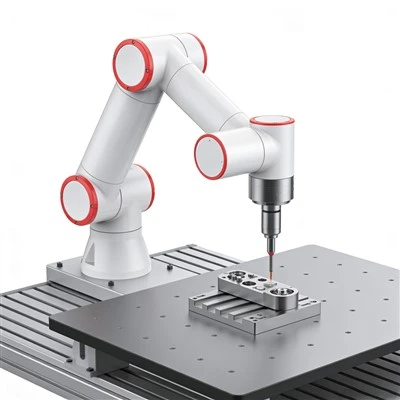
If you’re reading this and you’re at the point where you’re ready to stop guessing and get real numbers, hit me up. Whether you’re a small shop testing automation for the first time or a large facility scaling your production, we can walk through your needs, break down the exact costs, and make sure you’re getting a robot that fits your budget and your workload. No pressure, no sales pitch, just honest answers.
Six-Axis Collaborative Robot References:
- Industrial Robot Association. (2023). 6-Axis Industrial Robot Cost Benchmark Report.
- ABB Robotics. (2024). Total Cost of Ownership for Industrial Robots.
- Fanuc America. (2023). Guide to Selecting 6-Axis Robots for Manufacturing.
- OSHA. (2022). Safety Requirements for Industrial Robot Workcells.
Xinweilai Intelligent Technology (Shandong) Co., Ltd.
As one of the most professional industrial robot manufacturers and suppliers in China, we’re featured by quality products and good service. Please rest assured to wholesale bulk customized industrial robot from our factory. For pricelist and quotation, contact us now.
Address: Jinghua Road, Economic and Technical Development Zone, Dezhou City, Shandong Province
E-mail: liujiqing@xinweilaiznkj.com
WebSite: https://www.xinweilaiznkj.com/
