If you’ve ever stood in front of a power-hungry appliance—like a space heater, a large microwave, or a 2,000-watt air conditioner—and stared at the two-prong wall tap adapter next to your phone charger, you’ve probably asked yourself the same question: Is it safe to use that adapter with something this powerful? As a supplier of wall taps and adapters, I get this question almost every day from customers, from small business owners testing new equipment to homeowners trying to make a quick setup work without rewiring their entire house. The short answer is: It depends on two things—knowing the wattage your adapter is rated for, and matching that to what you’re plugging in. There’s no one-size-fits-all rule here, and cutting corners on either part is where most people run into trouble. Adapter and Wall Tap
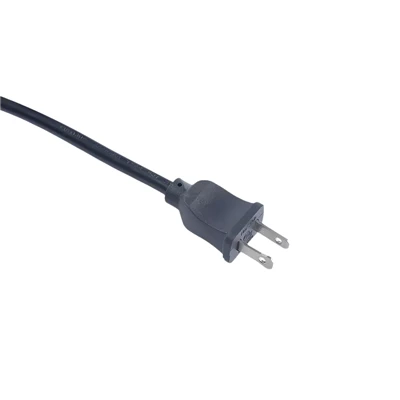
Let’s start with the basics of how electricity works, because this isn’t just a “rule” someone made up—it’s physics. Electricity flows through wires, and every wire has a maximum amount of power it can handle before the wire gets too hot. That maximum is measured in watts, and it’s calculated using two numbers: volts (the pressure of the electricity coming out of your wall) and amps (how much current is flowing through the wire). The formula is simple: Watts = Volts x Amps. In North America, standard household outlets are 120 volts, so a 15-amp outlet can safely handle 1,800 watts, and a 20-amp outlet can handle up to 2,400 watts. That same rule applies to every adapter and wall tap we sell. Every unit we manufacture has a printed rating right on it—look for a label that says something like “125V ~ 15A 1875W” or “125V ~ 20A 2500W.” That number is non-negotiable. If you plug an appliance that uses 2,000 watts into an adapter rated for 1,800 watts, you’re overloading that device.
The risk here is not a minor inconvenience—it’s a fire hazard. When a wire is forced to carry more power than it’s designed for, the extra current generates heat. That heat can melt the plastic insulation around the wires inside the adapter, and once that insulation breaks, exposed wires can cause a short circuit, or even ignite nearby materials like wallboard, fabric, or dust. I’ve seen this firsthand with a customer who plugged a 1,500-watt space heater into a cheap, generic adapter from a discount store that was only rated for 1,000 watts. Within 15 minutes, the adapter got so hot the plastic warped, and the plastic base started to smoke. They caught it in time, but that’s the kind of risk that comes from ignoring ratings and using untested adapters.
Now, I know what some of you are thinking: “But my cousin used this exact adapter for years with his microwave and never had a problem.” That’s the tricky part about electrical overload— it doesn’t always blow up the first time. It builds up over time. A 1,000-watt adapter used for 1,200 watts a few times a year might be fine, but if you use it daily for months, the insulation degrades, and eventually, that heat becomes a fire risk. We test every adapter we sell to strict industry standards, but even our units can’t perform beyond their rated wattage. That’s why we always emphasize to our clients (whether they’re buying 10 adapters for a café or one for their home) that the rated wattage is the maximum safe load, not a suggestion.
Another common mistake is daisy-chaining adapters or plugging multiple high-wattage devices into a single wall tap. A lot of customers will grab a four-outlet wall tap, plug in a space heater, a microwave, and a coffee maker, and assume that each outlet can handle 1,800 watts individually. But that’s not how power works. The total load on the wall tap and the outlet it’s plugged into is the sum of all the devices. If you have a 15-amp wall tap, even if each outlet is rated for 1,800 watts, plugging in three devices that total 5,000 watts will overload the tap and the wall circuit. We’ve had a few clients in the restaurant industry make this mistake when setting up small commercial appliances, and the result is always blown breakers, overheated wall taps, and unnecessary downtime. We actually created a quick load calculator guide for our business customers to avoid this exact scenario—adding up the wattage of every device on the tap and making sure it’s under the tap’s total rating.
Now, that doesn’t mean every high-wattage appliance needs a dedicated hardwired outlet (though that’s always the safest option). For many people, using a properly rated adapter is a convenient, safe solution—if you do it right. Let’s take a common example: a 1,200-watt window air conditioner. A 15-amp wall tap rated for 1,800 watts is perfect for this, as long as you’re only plugging the AC into it, not adding a lamp or a charger too. But wait a second—what if you’re using an adapter in a room with older wiring? Or a wall tap that’s been used for years and has loose internal connections? That’s another factor most people don’t consider: the condition of the outlet and the adapter itself. A frayed cord on an adapter, or an outlet with a loose slot, can increase resistance in the circuit, which leads to more heat—even if you’re under the rated wattage. That’s why we inspect every adapter before it leaves our warehouse, and we always recommend customers check their devices for damage before plugging them in, too.
There’s also a difference between indoor and outdoor adapters, which is another often-overlooked detail. If you’re plugging a high-wattage device like a lawnmower or a power washer outside, you need an adapter rated for outdoor use. Indoor adapters aren’t sealed against moisture or temperature changes, so even if they have the same wattage rating, they can short out if they get damp, creating a shock risk as well as a fire risk. We make separate lines for outdoor wall taps, specifically tested to handle wet conditions, and we always remind customers that using an indoor adapter outside is never safe—no matter how high its wattage is.
I know cost is a factor for a lot of people, and it’s tempting to go for the cheapest adapter you can find online or at a dollar store. But here’s the thing: cheap adapters often cut corners on the materials. They use thinner wires, lower-quality plastic, and skip the safety features like circuit breakers or thermal fuses that reputable adapters have. Those safety features are non-negotiable for high-wattage use. A circuit breaker in an adapter will cut off power automatically if it gets too hot, preventing a fire, while a cheap adapter without one will keep running until something melts. We don’t sell the cheapest adapters on the market, but we sell ones that have been tested to meet strict safety standards, and that’s worth the extra cost when you’re dealing with high-wattage appliances that can cause serious harm.
Let’s go back to that original question, “Is it safe to use a wall tap adapter with high-wattage appliances?” The answer, for anyone working with adapters as a supplier, is this: Yes, if you match the rated wattage of the adapter to the total wattage of your devices, don’t overload the circuit, inspect all devices for damage, and use a rated adapter for the environment (indoor or outdoor). It’s not a guess, it’s a matter of checking labels and following basic electrical rules. Too many people treat adapters like disposable accessories, not critical electrical components, and that’s where the problems start.
As someone who’s been in this business for over a decade, I’ve seen adapters that were treated badly work fine, and perfectly good adapters that failed because they were misused. The most common preventable issue we hear about is overload from misrating. A client once contacted us because their space heater adapter kept tripping the breaker—turns out they’d plugged a 2,000-watt heater into an adapter rated for 1,500 watts, and after we explained the risk, they replaced it with a properly rated unit, and the problem was gone. That’s the kind of solution we care about: helping people use their appliances safely, not just selling them a product.
If you’re not sure what wattage your appliance uses, that’s easy to check. Most devices have a label on the back or bottom that lists wattage, amps, or volts. If you can’t find it, you can also find a product manual online, or give us a call—we often help customers figure out their load calculations, no strings attached. If you’re buying adapters in bulk for a business, or just need one for your home’s power setup, we can also recommend the right model for your specific needs, so you never have to guess if it’s safe.
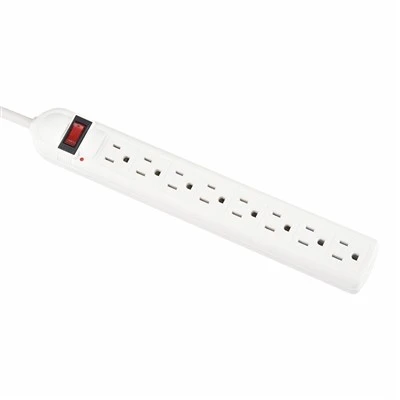
Using a wall tap adapter with a high-wattage appliance doesn’t have to be risky, but it does require a little attention to detail. Don’t ignore the rated wattage, don’t daisy-chain or overload circuits, use the right adapter for the job, and invest in a reputable unit that’s been tested for safety. When you do that, adapters are a convenient, reliable way to power your appliances without the cost of rewiring. If you have questions about which adapter is right for your high-wattage devices, or if you need bulk orders for your business, we’re here to help. Reach out to our team to discuss your needs, and we’ll make sure you get a solution that’s both safe and efficient.
Australia Standard Power Strip References
- National Electrical Code Handbook, National Fire Protection Association, 2023.
- Electrical Safety Basics, U.S. Consumer Product Safety Commission, 2022.
- UL Standard for Safety for Attachment Plugs and Receptacles, Underwriters Laboratories Inc., 2021.
- Outdoor Electrical Safety Tips, Occupational Safety and Health Administration, 2020.
Yuyao Mideal Electric Co., Ltd.
Yuyao Mideal Electric Co., Ltd. is one of the most professional adapter and wall tap manufacturers and suppliers in China, also supports customized service. With abundant experience, we warmly welcome you to wholesale cheap adapter and wall tap in stock here from our factory. For price consultation, contact us.
Address: No.28, Lujiafan Road, Langxia Street, Yuyao City, Zhejiang Province, China
E-mail: manager@nbmideal.com
WebSite: https://www.midealcord.com/
