Hey everyone, let’s cut to the chase—when the lights go out or you need power somewhere the grid doesn’t reach, most people jump straight to stationary generators. But here’s the thing: as a mobile power plant supplier, I see this debate every single day, and the answer’s not as black and white as you might think. Mobile Power Plant
I’ve been in this game for 7 years now, working with construction crews, event organizers, disaster response teams, and even small towns that hit grid snags. Let me break this down like I would with a new client—no stuffy jargon, just the real stuff that matters.
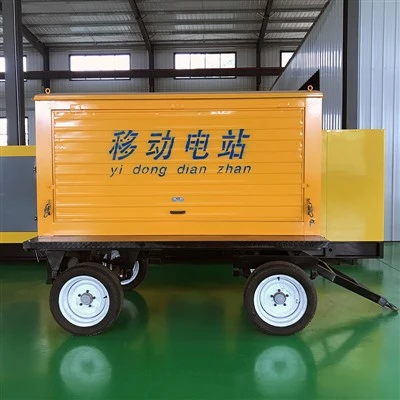
First, let’s get the basics out of the way. A stationary generator is fixed to a concrete pad somewhere—usually a backup for a factory, hospital, or office building. It stays put, hooks into the building’s electrical system, and runs when the grid dies. A mobile power plant (that’s what I sell, by the way) is a fully self-contained unit on a trailer, truck chassis, or even a shipping container that you can tow or drive anywhere you need it. No concrete, no permanent installation, just show up, plug in, and go.
Now, let’s talk about the big wins mobile has over stationary—especially for the people I work with. The number one thing? Flexibility. Last year, I had a client that was building a new housing development on the edge of town. The grid there was still 6 months away from being live, and they needed power for cranes, concrete mixers, and job site tools. A stationary generator would’ve meant waiting to pour a pad, hiring an electrician to run lines, and paying to have it installed—cost them almost $20k just to get set up. We dropped a mobile unit right on the job site the next day, had it hooked up in 4 hours, and they were back to work. They saved 3 months of waiting and almost $15k. That’s not a small number for a small construction company.
Or take disaster response. When a hurricane knocked out power across Florida a couple years back, I sent 8 mobile units to different towns. One town’s water treatment plant went down—their stationary generator was broken, and the crew couldn’t fix it fast because parts were stuck in flooded warehouses. We towed a 500kW unit to the plant in 2 hours, powered the pumps, and kept 10,000 people from going without clean water. If we’d had to haul a stationary generator, we would’ve had to move it from its permanent home (which was a hospital 50 miles away), disconnect it, transport it, and reinstall it. That would’ve taken 12 hours minimum. In a disaster, every hour counts.
Another big one: no hidden costs. Stationary generators aren’t just the unit itself. You need a concrete foundation (usually $500-$1,500 depending on size), a transfer switch to connect to the building’s grid (another $1,000+), professional installation (add $2,000-$5,000), and regular inspections every year to make sure it works when you need it. And if you ever need to move it—say you sell the building, or the power needs to go to a different spot—you’re looking at another $3,000 to $7,000 to disconnect, move, and reinstall. Mobile units? The price you see is almost all you pay. Sure, fuel is extra, but we deliver fuel too if you need it. No foundation, no transfer switch, no hidden labor costs. For small businesses or event organizers, that’s a game-changer. I had a music festival planner last summer who told me they saved $22k compared to renting a stationary setup for their 3-day festival. They didn’t have to run power 2 miles from a fixed generator, which meant less line loss and more reliable power for the stages and food trucks.
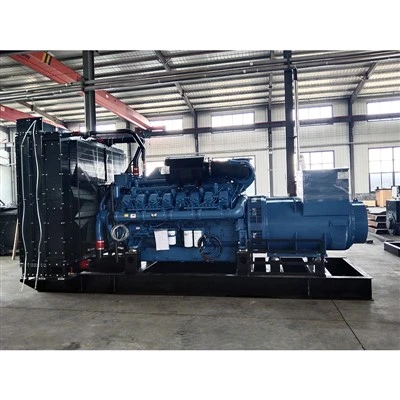
Wait, but let’s not act like mobile power plants are perfect. There are times when stationary is the better call. If you’re a hospital, for example, you need backup power 24/7, and you can’t afford to wait for a mobile unit to show up. A stationary generator is right there, connected to your building, ready to go in 10 seconds. Same with a data center—they need constant, stable power, and stationary units are designed for that long-term, low-vibration use. Mobile units are tough, but they’re built to be moved, so they don’t have the same heavy-duty, 24/7 run time as a stationary. Most of our units can run solid for 12 hours straight before needing a break, while a stationary can go for weeks. That’s a key difference.
Also, upfront cost. A small stationary generator (100kW, good for a small shop) runs around $15k-$25k installed. A comparable mobile unit is around $25k-$35k. So if you just need backup power for your small shop that rarely goes out, a stationary might be cheaper. But if you’re using power on the move or for temporary jobs, that extra upfront cost pays off fast.
Another thing people don’t talk about: maintenance. Stationary generators need regular tune-ups, oil changes, filter replacements, and load testing every 6 months. If you skip that, they’ll die when you need them most. I’ve had clients who let their stationary generator sit for 3 years without a test, then when the grid went out, it wouldn’t start. Mobile units? We build them with easier access to parts, so our clients can do basic maintenance themselves, or we offer monthly check-ins for a low cost. And because you don’t just leave them sitting (most of the time—if you’re using them for temporary power), you’re more likely to catch small issues before they become big ones.
Let me also clear up a myth: mobile power plants aren’t just for “emergencies” or “construction.” A lot of my clients use them for long-term stuff too. A school district in Texas uses 4 mobile units to power 3 different campuses that are under construction and one that’s expanding—they’ve had them for 2 years now. It’s cheaper than installing 4 stationary generators, and when the new campuses are done, they can move the units to another district. That’s the kind of flexibility you can’t get with fixed gear.
I will say, though, that there’s a common mistake people make when choosing between the two: buying the size based on what they think they need, not what they actually use. For example, a 500kW stationary is overkill for a small shop, but a 500kW mobile is perfect for a job site. We help clients size their units all the time—one restaurant thought they needed a 100kW stationary, but we calculated their peak power use (including fryers, refrigerators, and HVAC) was only 40kW, so a 50kW mobile unit worked. They saved $10k on the unit and $2k in annual fuel costs because they weren’t running extra power they didn’t need.
So, are mobile power plants better than stationary generators? The answer is: it depends on what you need. If you need permanent, 24/7 backup for a critical facility like a hospital or data center, stationary is still the go-to. But if you need temporary power, power on the move, flexibility, or don’t want to deal with the hassle and cost of installation, mobile power plants are almost always the better pick.
That’s why I’ve built my business around this—we don’t just sell units, we help clients figure out what they actually need. Whether you’re a construction crew needing power for a job site, an event planner setting up a festival, a town dealing with ongoing grid upgrades, or even a small business that rarely needs backup but doesn’t want to be stuck when the lights go out, we’ve got options.
If you’re tired of overpaying for stationary generators you can’t move, or you’re tired of waiting weeks for grid power to get to your project, reach out to me. We can walk through your needs, size the right unit for you, and get it to you fast. No sales pitches, no hidden fees, just the power you need, when and where you need it.
Mobile Power Plant References
- U.S. Energy Information Administration. (2022). Backup Power Generation Trends for Commercial and Industrial Facilities.
- International Code Council. (2021). Standards for Temporary Power Installations in Construction and Event Spaces.
- National Fire Protection Association. (2020). Stationary Generator Safety and Maintenance Guidelines.
- Mobile Power Generators Association. (2023). Market Analysis of Mobile Power Units for Emergency and Temporary Applications.
Weifang Bofa Power Equipment Co., Ltd.
We’re well-known as one of the best mobile power plant suppliers in China. With a professional production team, we are able to meet the needs of the majority of our customers. Please feel free to buy cheap mobile power plant for sale here from our factory. For price consultation, contact us.
Address: Lianhuachi Village, Fangcheng Street Office, Fangzi District, Weifang City, Shandong Province.
E-mail: sales@wfbofapower.com
WebSite: https://www.wfbfgenset.com/
