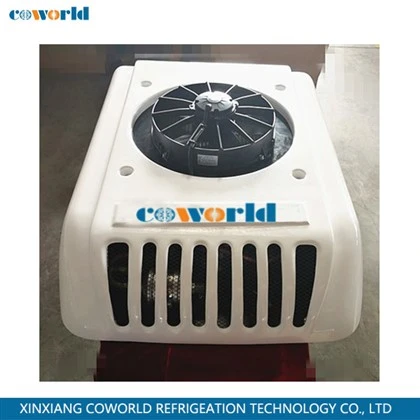
If you’ve ever stopped to think about what keeps your grocery store’s produce fresh, or how your favorite ice cream shop maintains that perfect scoop, there’s a good chance electric refrigeration units (ERUs) are doing the heavy lifting. As a supplier of these units, one question I get more than any other is this: Can an electric refrigeration unit be used as a freezer? It’s a fair question, and the answer isn’t as simple as a yes or no—so let’s break down the science, the practical use cases, and what this means for anyone weighing their cold storage needs. Electric Refrigeration Unit
First, let’s get the basics straight. Most people use “refrigerator” and “freezer” interchangeably, but they’re designed for two very different temperature ranges. A standard household fridge keeps food at 37°F to 40°F (3°C to 4°C) — cold enough to slow bacterial growth, but not so cold that water freezes solid. A freezer, by contrast, runs at 0°F (-18°C) or lower, which stops almost all bacterial activity entirely, making it possible to store food for months instead of weeks.
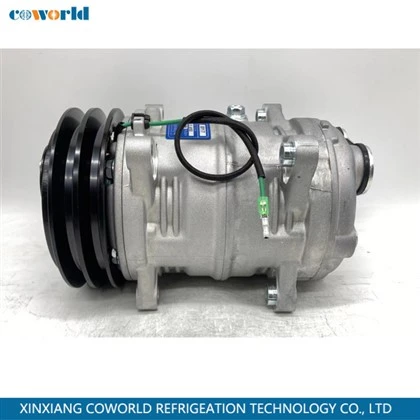
So, how does an ERU fit in here? At their core, all ERUs work on the same vapor-compression refrigeration cycle: a compressor pressurizes a refrigerant gas, which turns into a hot, high-pressure liquid. That liquid flows through a condenser, where it releases heat, then expands into a low-pressure gas in an evaporator. As it evaporates, it absorbs heat from the surrounding air, cooling the space inside the unit. The difference between a refrigerator and a freezer lies in how this cycle is tuned. A refrigerator’s compressor runs at a lower power output, and the evaporator is sized to maintain the higher temperature range. A freezer’s compressor is more powerful, and the evaporator is built to pull more heat out, dropping temperatures well below freezing.
Now, the short answer: Yes, you can adapt some electric refrigeration units to work as freezers — but not all. It all comes down to two key factors: the unit’s compressor power and its temperature setpoint range. Let’s talk about the units we supply, for example. We build ERUs for everything from small walk-in coolers for local cafes to large, modular cold rooms for distribution centers. Many of our standard ERUs are calibrated for 35°F to 45°F — perfect for refrigerated storage of dairy, produce, and fresh meats. But we also offer adjustable models that let you dial the temperature down to -10°F or lower, which is exactly where freezer territory starts.
That said, there’s a catch: Trying to turn a basic, temperature-limited refrigerator unit into a freezer on your own (say, a home fridge, or a cheap model from a big box store) is a bad idea. Why? A standard fridge’s compressor isn’t built to run long enough or hard enough to maintain sub-zero temperatures. If you force it, the compressor will overheat, burn out prematurely, and you’ll end up with a very expensive paperweight. For commercial or industrial use, that’s not just a hassle — it’s a risk, especially if you’re storing perishable goods that could spoil if your cold storage fails.
Let’s dive into the practical side. For small businesses, like a food truck operator or a boutique bakery, the line between refrigeration and freezer can blur. Let’s say you run a food truck that needs to store both fresh sandwich ingredients (at 38°F) and frozen meat patties (at 0°F). Instead of buying two separate units, you can use an ERU with an adjustable temperature setting. We supply units that let you switch modes — one day, run it as a fridge for incoming produce, the next, crank it down to store frozen inventory. That flexibility saves space, cuts costs, and is way easier to maintain than two separate systems. It’s also perfect for pop-up events, where you might need to adjust cold storage on the fly depending on what you’re serving.
For larger operations, like grocery chains or pharmaceutical warehouses, the ability to use ERUs as freezers opens up new possibilities for modular cold storage. A lot of our clients use ERUs to build custom cold rooms, and some of them run half the room as refrigerated space and half as frozen. We design our units to handle that kind of split load, with compressors powerful enough to maintain consistent temperatures across separate zones. The key here is that the ERU isn’t just “working as a freezer” — it’s engineered for dual-temperature functionality, which means it meets all the safety and performance standards for both fridge and freezer use.
Now, let’s talk about common misconceptions. Some people think that a freezer is just a fridge that’s colder, but that’s not quite right. Freezers also have different insulation: a standard fridge has thinner walls, because it doesn’t need to hold in as much cold. A freezer needs thick, dense insulation to prevent cold from escaping and keep energy costs down. Our ERUs designed for freezer use have that extra insulation, so they’re not just tuned for lower temperatures — they’re built to efficiently maintain them without wasting energy. A basic fridge unit doesn’t have that insulation, so even if you could get it to reach 0°F, it would run constantly to keep that temperature, leading to sky-high electricity bills and a short lifespan.
Another point: energy efficiency. When comparing an ERU used as a freezer to a dedicated commercial freezer, the right ERU will often compete on energy use. Because we build our ERUs with variable-speed compressors, they adjust their power based on how much cooling is needed. If you’re only storing frozen goods that don’t need constant extreme cooling, the compressor will run at a lower speed, saving energy. That’s a big deal for businesses that run cold storage 24/7 — the energy savings add up fast, especially with rising utility costs.
Of course, there are cases where using an ERU as a freezer isn’t the best choice. If you need a dedicated, ultra-low-temperature freezer for things like vaccines, lab samples, or cryogenic storage, you’ll need a unit specifically built for those ultra-cold ranges (like -40°F or lower). Our ERUs aren’t designed for that — we focus on commercial and industrial cold storage for food, beverage, and general warehousing, so our temperature sweet spot is from -10°F to 55°F, which covers both refrigeration and standard freezer needs. For anything colder than that, you’ll need a specialized freezer unit.
So, what does this mean for you? If you’re a business owner looking to streamline your cold storage, electric refrigeration units can absolutely serve as freezers — as long as you pick the right model. The key features to look for are: an adjustable temperature range that covers at least down to 0°F, a compressor powerful enough to maintain that temperature without overworking, and sufficient insulation to keep energy costs low. As a supplier, that’s exactly what we build into our ERUs. We work with clients across industries, helping them choose the right units for their specific needs, whether that’s a small unit for a corner store or a large system for a distribution center.
At the end of the day, the line between a refrigerator and a freezer is a matter of design, not a fundamental difference in how cold storage works. Electric refrigeration units are flexible, scalable, and adaptable to a wide range of needs — including freezer use — when engineered correctly. If you’re tired of managing multiple cold storage units, or need a solution that can grow with your business, an ERU might be exactly what you’re looking for.
If you’re ready to explore how an electric refrigeration unit can work for your cold storage needs, we’re here to help. Reach out to our team to discuss your requirements, ask questions, and find the right unit for your business. We’ll walk you through the options, explain the features, and make sure you get a solution that’s efficient, reliable, and tailored to your specific needs.
Refrigerated Truck References
- ASHRAE Handbook: Refrigeration. American Society of Heating, Refrigerating and Air-Conditioning Engineers, 2022.
- “Commercial Refrigeration vs. Freezer Units: Key Differences.” Food Logistics, vol. 34, no. 6, 2021, pp. 45–47.
- V. W. Goldschmidt, “Vapor-Compression Cycle Performance for Commercial Refrigeration Systems,” International Journal of Refrigeration, vol. 89, 2018, pp. 112–120.
- U.S. Energy Information Administration, “Commercial Cold Storage Energy Use Benchmarks,” 2023.
- “Modular Cold Storage Solutions for Small to Medium Businesses.” National Restaurant Association, 2022.
Xinxiang Coworld Refrigeration Technology Co., Ltd.
As one of the most professional electric refrigeration unit manufacturers and suppliers in China, our products have good reputation in the market. We warmly welcome you to buy cheap electric refrigeration unit for sale here from our factory. If you have any enquiry about cooperation, please feel free to email us.
Address: B103 ROOM, GT CITY, NO.199 ZHENGZHONG ROAD, HIGH TECH ZONE, XINXIANG CITY, HENAN PROVINCE, CHINA
E-mail: coworldfrio@hotmail.com
WebSite: https://www.coworldthermo.com/
