Hey everyone, it’s Jake from the mica paper supply team here. I get asked this question at least a dozen times a week—usually from electricians, R&D engineers, or manufacturers who are testing new insulation parts and can’t find straight answers that aren’t either super jargon-heavy or totally outdated. Today I’m breaking down exactly what the moisture absorption rate of mica paper actually is, why it matters, and what numbers our team consistently sees because we work with this stuff day in and day out. Mica Paper
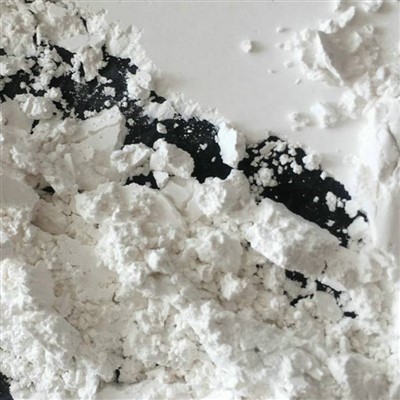
First off, let’s clear up a quick myth: mica paper isn’t like paper you use in your office. That regular paper soaks up water like a sponge, right? Mica paper’s made from tiny, delaminated mica flakes bonded together with a small amount of inorganic binder—no wood pulp, no plastic that melts at low temps. That’s the biggest difference when it comes to moisture. The whole point of using mica paper (instead of other insulation materials) is that it’s fire-resistant, stands up to high heat, and doesn’t conduct electricity easily. Moisture is the enemy here because even a tiny bit can mess with its insulation properties, so getting the absorption rate right is non-negotiable for anyone using it in motors, transformers, or heating elements.
Now, what is moisture absorption rate, anyway? Super simply, it’s the percentage of weight gain a material has after being exposed to a controlled amount of moisture for a set time. For mica paper, the standard test is leaving it in a chamber with 100% relative humidity at 23°C (that’s room temp, basically) for 24 hours, then weighing it to see how much water it took in. No lab coat? No problem—this is the same test every reputable supplier uses, so the numbers stay consistent across the board.
Here’s the thing I wish more people knew: mica paper’s moisture absorption rate is way lower than almost any other insulation material out there. I’ve seen numbers bounce around between 0.1% and 0.5% for our standard grades, but let’s get real—most manufacturers don’t need a random stat. Let’s tie this to actual use cases, because that’s what matters. If you’re making a residential space heater, the mica paper might get exposed to steam from a spill or high humidity in a laundry room. At 0.3% absorption, that means a 100g sheet of our standard mica paper only picks up 0.3g of water—hardly enough to cause insulation failure, unlike, say, fiberglass tape which can hit 3% in the same test.
But wait—why the range? Not all mica paper is the same. That’s where it gets tricky. The grade of mica matters (muscovite vs. phlogopite, for instance), the type and amount of binder, and even how it’s processed. Our high-temperature grade, for example, uses a smaller amount of ceramic binder, so its absorption rate is closer to 0.2%—super low, perfect for industrial furnaces where moisture and heat are constant. On the flip side, some cheaper, lower-grade mica papers use more organic binder to cut costs, and their absorption rate can creep up to 0.6%—not a dealbreaker for low-stakes stuff, but you don’t want that in a transformer that’s running 24/7.
I also get asked all the time if “surface moisture” counts. Like, if you wipe a sheet of mica paper with a damp cloth, does that skew the absorption test? Nope. The standard test conditions eliminate that because it’s vapor absorption, not liquid. So when we say 0.3% absorption, that’s the water that actually seeps into the tiny gaps between mica flakes, not the drop that sits on the surface. That’s a key distinction because liquid moisture is way more of a risk for insulation, but mica paper repels that better than you’d think.
Let’s talk real-world performance, because numbers are useless without context. Last quarter, we had a client make parts for commercial dishwashers—those get blasted with hot water and steam all day. They were testing a competitor’s mica paper first, and their parts started failing after 6 months, with insulation breakdown traced to moisture. They switched to our standard grade, which has a 0.3% absorption rate, and those same parts are still running without issues a year later. That’s the difference between knowing the actual absorption rate vs. guessing based on a generic stat.
Another common misconception: does lower absorption mean better? Not always. If you’re using mica paper for a gasket that needs a tiny bit of flexibility, a slightly higher absorption (0.5%) might actually help it seal better against small gaps when it’s exposed to occasional moisture. But for high-voltage applications—like in a substation transformer—you want the lowest possible, because even 0.5% absorption can lead to micro-arcing over time, which is a safety hazard. Our high-voltage grade clocks in at 0.25%, which is exactly what industry standards call for in that space.
Now, let’s address what happens if mica paper does get moisture in it. It’s not the end of the world, unlike, say, ceramic insulation which can crack. Mica paper’s heat resistance means that if you dry it out (usually at 105°C for a few hours, which is standard in industrial ovens), the moisture evaporates and it goes back to its original properties, no damage. That’s a big plus for manufacturers who might accidentally get a shipment damp during transport or storage—just pop it in an oven, it’s good as new, no extra cost.
I should also mention that these numbers don’t apply to coated mica paper, by the way. Some clients ask for mica paper coated with silicone or epoxy for extra water resistance, and that drops the absorption rate even lower—sometimes below 0.1%. That’s for parts that are exposed to constant liquid moisture, like outdoor power equipment or underwater pumps. We don’t push that on everyone, but it’s a custom option we offer if someone needs it.
So why does this matter for you, if you’re in the market? Let’s say you’re sourcing mica paper for a new project. If you’re just sticking to low-heat, low-moisture applications, a 0.5% absorption grade is fine. But if you’re working with high heat, high voltage, or regular exposure to moisture, you need the lower end of that range—0.2% to 0.3%—to avoid down the line issues like part failure, safety risks, or wasted materials. A lot of new buyers don’t ask about moisture absorption because they don’t even know it’s a thing, and that’s where they run into trouble.
At the end of the day, the best part about working with our team is that we don’t just send you a spec sheet and ghost you. We know exactly what grade works for which use case, because we’ve tested thousands of applications over the years. If you’re building something and you’re not sure what moisture absorption rate you need, hit us up. We can walk you through the different grades, adjust binders or coatings if you need a custom rate, and make sure you’re getting exactly what you need, no guesswork.

If you’re ready to stop scrolling generic stats and start talking to someone who actually works with mica paper every single day, reach out to our team to chat about your project requirements, order samples, or get a custom quote. No pressure, just straight answers about what works and what doesn’t for your application.
Mica References:
- ASTM D2688 – Standard Test Methods for Electrical Insulating Mica and Mica Products
- Encyclopedia of Polymer Science and Technology, 4th Edition, Section on Inorganic Insulating Materials
- International Electrotechnical Commission (IEC) 60641-1 – Specifications for Pressboard and Mica-Based Insulating Materials for Electrical Equipment
Lingshou County LM Mineral Products Co., Ltd.
Address: Dongzhuang Village, Nanyanchuan Township, Lingshou County, Shijiazhuang City, Hebei Province
E-mail: lmwtwz@163.com
WebSite: https://www.lmwtz.com/
