If you’ve ever stared at a dead phone mid-commute or waited for your electric car to charge after a long trip, you’ve probably taken lithium cell batteries for granted. But here’s a question most people don’t ask: when your battery is powering that device, what part is actually doing the heavy lifting to make that happen? A lot of folks point to the lithium itself, or the charger, or even the phone’s software—but the unsung hero here is the cathode. As a lithium cell batteries supplier, I’ve spent years talking to clients who only care about capacity or price, but once they understand the cathode’s role, they stop seeing it as a “random part” and start seeing it as the backbone of the whole battery. Let’s break this down simply, no stuffy jargon promises. Lithium Cell Batteries

First, let’s ground this in how a lithium cell actually works, because the cathode doesn’t exist in a vacuum. A standard lithium-ion (Li-ion) cell has three key parts: the cathode, the anode, and the electrolyte. The electrolyte is just the go-between for the other two, right? The anode is almost always made of graphite these days, which is cheap and holds lithium ions really well. When you charge the battery, the charger shoves lithium ions from the anode over to the cathode, where they get stuck in tiny gaps in the cathode material. When you use the battery, those ions escape the cathode, zoom back through the electrolyte, and push electrons through the circuit to power your device. Wait, that’s the big difference most suppliers will skip: the anode just stores lithium when charging, but the cathode is where the lithium hangs out when the battery is “off” and ready to go. It’s not just a storage locker—it’s the gatekeeper that controls how much energy you can get, how long the battery lasts, and even how safe it is.
Let’s start with capacity, because that’s the first thing customers ask us about. If you want a battery that lets your phone last a full day or an electric car go 300 miles on a charge, that number ties straight to the cathode. The amount of lithium a cathode can hold, and how easily it lets that lithium move back and forth, determines how much energy the battery can cram in. For example, early Li-ion batteries used lithium cobalt oxide (LCO) as the cathode back in the 1990s—those were the first consumer Li-ion batteries, and they gave cell phones just a couple hours of talk time. Why? Because LCO can only hold so many lithium ions before it stops letting them move, so you hit a capacity wall fast. Now we use things like lithium iron phosphate (LFP) or nickel manganese cobalt (NMC) cathodes, which hold more lithium and let ions zip around way smoother. A lot of suppliers will swap to cheaper cathodes to cut costs, but that’s a short-term win because it slashes capacity. When a client comes to us asking for a 5000mAh phone battery, the first thing we don’t tweak is the anode or electrolyte—we adjust the cathode’s composition. That’s where the magic happens.
Next up: cycle life. That’s how many times you can charge and drain a battery before it drops below 80% of its original capacity, right? If a battery dies after 200 charges, it’s garbage fast; if it lasts 1000 charges, that’s a game-changer. Again, the cathode is the main factor here. Every time lithium ions zoom in and out of the cathode, the material swells a tiny bit. Too much swelling, and the cathode breaks down, so fewer lithium ions can move, and capacity plummets. For example, LCO cathodes swell a lot over time—so if you charge your phone to 100% every night, the LCO breaks down faster, and your battery dies in 2 years. That’s why a lot of electric car manufacturers switched to LFP cathodes a few years back: LFP barely swells at all, so it can handle way more charge cycles, sometimes up to 5000. We see this with our own products: when we supply LFP cathodes for energy storage batteries, our clients tell us their batteries last 10+ years, vs. 5 for older models with LCO cathodes. Skimp on the cathode material, and cycle life collapses—no other part can fix that.
Safety is another big one that people sleep on. Ever heard of a phone battery catching fire? Most of the time, that’s a cathode issue. If the cathode is unstable, when lithium ions get stuck, they can form tiny metal dendrites that pierce the separator between anode and cathode, causing a short circuit. LCO is super unstable at high voltages, so if you overcharge a phone with an LCO cathode, those dendrites pop up fast. LFP, on the other hand, is way more thermally stable—it doesn’t react as much when it gets hot, so it’s way less likely to catch fire. That’s why we push LFP for industrial and electric vehicle applications, where safety isn’t a nice-to-have—it’s a requirement. A lot of cheap suppliers use low-grade cathode materials to cut costs, which means higher risk of thermal runaway. As a supplier, we never cut corners on cathode quality because a bad battery isn’t just a hassle for a customer—it can be dangerous.
Wait, let’s talk about a common misconception: the “lithium” in the battery. A lot of people say “lithium is the battery’s fuel,” which is technically true, but the cathode is what holds that lithium. If the cathode can’t hold lithium, the lithium is just floating around in the electrolyte, doing nothing. That’s why battery researchers are always working on new cathode materials—silicon-based cathodes, sulfur cathodes, even solid-state cathodes—to hold more lithium, make cycles longer, and improve safety. We’ve been testing new sulfur cathodes for our next-gen energy storage lines, and early results show they can double the capacity of our current LFP cathodes. That’s the kind of innovation that comes down to the cathode, not the anode or electrolyte.
Now, as a supplier, this matters for our clients, whether they’re making consumer electronics, electric vehicles, or grid storage. Let’s say you’re a small business making power banks: if you pick a cheap cathode, your power bank will die after a few months, and customers will leave bad reviews. If you pick a high-quality cathode, your power bank will last a year, and you’ll build a loyal customer base. For electric car manufacturers, the cathode is the difference between a car that goes 200 miles on a charge and one that goes 400. For grid storage, it’s the difference between a system that pays for itself in 5 years and one that takes 10. We don’t just sell “cathodes”—we sell the part that makes our customers’ products work. That’s why we work closely with clients to pick the right cathode for their needs, not just the cheapest one.
Let me give you an example of a time this came up with a client last year. A startup making e-scooters came to us, saying their batteries were only lasting 6 months, and they wanted a cheaper solution. We tested their current cathode, and it was a low-grade LCO that was breaking down fast. We suggested switching to a medium-grade NMC cathode, which cost 15% more, but we guaranteed it would double the cycle life. They tried it, and now their batteries last 12 months, so their service costs went down, and customer satisfaction went up. If we had just tried to sell them a cheaper cathode, they would’ve had to replace their entire product line in 6 months, which would’ve been a disaster. That’s the value of knowing the cathode’s role—not just selling a part, but solving a problem.
Another example: we supply cathodes for solar energy storage. A client was using an old LFP cathode, and their storage system would lose 20% of its energy every month. We switched them to a new doped LFP cathode we developed, which has a more porous structure that holds lithium ions better. Now their energy loss is down to 5%, and they can go multiple days without recharging. That’s directly from the cathode’s structure—no other part was changed. It’s a small tweak, but it makes a huge difference.
Now, let’s clear up a common confusion between cathode and anode. A lot of new people in the battery space mix these up. Anode is the negative terminal, cathode is the positive terminal. When the battery is discharging (powering your device), electrons flow from the anode (negative) to the cathode (positive) through the external circuit—so the cathode is the positive pull that gets electrons moving. When charging, it’s the opposite: electrons go to the anode, and lithium ions go to the cathode. That’s the key flow, and the cathode is the one that manages that ion movement. Mess with that, and the whole battery stops working correctly.
What about cost? The cathode makes up about 30-40% of a Li-ion battery’s total material cost. That’s a huge chunk! So if you’re trying to save money, cutting cathode costs is the first thing suppliers do, but it’s almost always a bad long-term move. We’ve seen clients who switched to cheaper cathodes to save 10% per battery, only to have 20% more warranty claims, which ended up costing them way more. As a supplier, we price our cathodes fairly, because we know that cutting corners on the cathode hurts both us and our clients. We’d rather sell a high-quality cathode at a fair price than undercut someone with a low-grade product that ends up causing problems.
Now, let’s talk about what’s next for cathodes. A lot of people are talking about solid-state batteries, and the cathode is the biggest challenge there. Solid electrolytes are great, but the cathode has to work with that solid electrolyte, which is different from the liquid electrolyte we use now. Researchers are developing cathodes that don’t react with solid electrolytes, which would make solid-state batteries safer and have longer cycle life. We’re already testing some of these next-gen cathodes with our R&D team, and we’re excited to bring them to clients in the next 2-3 years. That’s the future of lithium cell batteries, and it all starts with the cathode.
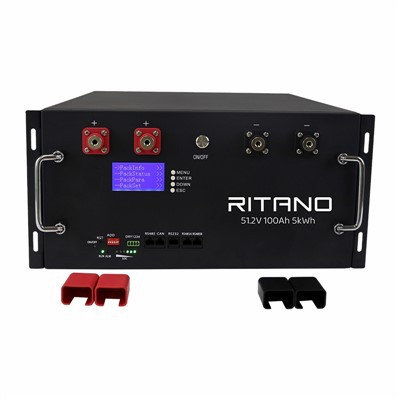
So, to wrap this up: the cathode isn’t just a random component in a lithium cell. It’s the part that determines how much energy you get, how long the battery lasts, how safe it is, and even how much it costs. As a lithium cell batteries supplier, we don’t just provide parts—we provide cathodes tailored to our clients’ needs, because we know that’s where the value is. If you’re working on a project that needs reliable, high-performance lithium cells, whether it’s for consumer electronics, electric vehicles, energy storage, or anything else, we’re here to help you pick the right cathode for your goals. Reach out to us to discuss your specific needs, and we’ll work with you to find the best solution for your project.
Lifepo4 Battery References
- Tarascon, J. M., & Armand, M. (2001). Issues and challenges facing rechargeable lithium batteries. Nature, 414(6861), 359-367.
- Liu, J., et al. (2019). Lithium iron phosphate cathode materials for lithium-ion batteries: A review. Journal of Power Sources, 410-411, 169-180.
- Nitta, N., Wu, F., Lee, J. T., & Yushin, G. (2015). Li-ion battery materials: Present and future. Materials Today, 18(5), 252-264.
Dongguan Ritano New Energy Co., Ltd.
With abundant experience, we are one of the most reliable lithium cell batteries manufacturers and suppliers in China. We warmly welcome you to wholesale customized lithium cell batteries made in China here from our factory. If you have any enquiry about quotation, please feel free to email us.
Address: Building 27, Jewelry Park, Huanchang North Road, Changping Town, Dongguan City, Guangdong Province
E-mail: Umi.sales@ritano.cn
WebSite: https://www.ritanopower.com/
