If you’re in the semiconductor, medical device, or aerospace manufacturing game, you’ve definitely heard of ESD cleanrooms—but if you’re not in the engineering trenches, it’s easy to gloss over what actually makes these spaces non-negotiable. As a cleanroom engineering supplier that’s spent 15 years troubleshooting for startups and Fortune 500s alike, I can tell you: ESD (electrostatic discharge) isn’t just a buzzword, it’s the quiet destroyer of $10k+ microchips, medical sensors, and even rocket components. Let’s break down the non-negotiable requirements that separate a standard cleanroom from one that actually protects your parts—and why cutting corners here costs way more than investing in the right setup. Cleanroom Engineering
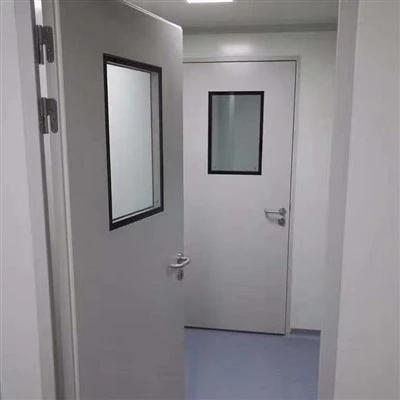
First, let’s get the basics straight: ESD is that tiny zap you feel when you touch a doorknob in winter, but for a silicon chip, that zap is enough to blow a circuit so small you can’t see it with the naked eye. A single ESD event can kill 30-50% of unprotected microchips, and those defects don’t show up until way down the supply line—think of a pacemaker failing mid-surgery or a Tesla battery module shorting out. So ESD cleanrooms aren’t just “nice to have” for sensitive manufacturing; they’re a compliance must for ISO 13485 (medical devices) and IPC-A-610 (electronics assembly), to name a few.
Now, let’s dive into the hard requirements, the ones we walk every client through during their initial site walkthrough. First up: surface material conductivity. This isn’t just “pick a blue tile”—every single surface in the cleanroom has to dissipate static, not hold it. That means flooring? No regular vinyl. We’re talking static-dissipative (SD) or conductive epoxy, tested to a surface resistance of 1×10^5 to 1×10^12 ohms. Walls? Forget drywall—we use coated metal panels or static-dissipative composite materials that don’t shed particles or build up charge. Even the workbenches aren’t the cheap particleboard from Home Depot. They need a SD laminate top and a grounding point that’s checked daily. I once had a client try to save $2k on a standard workbench; six months later, they had to scrap $120k in defective sensor parts because the bench held 2,000 volts of static. That’s a no-brainer, right?
Next, air quality and static control via HVAC. Regular cleanrooms filter out dust, but ESD cleanrooms have a extra layer: ionizers. These pump out balanced positive and negative ions to neutralize any static charge floating in the air, because even a speck of dust with charge can cling to a microchip or cause a zap. But here’s the thing—ionizers only work if you test them weekly. We use a simple voltmeter to check that the charge decay rate is under 2 seconds; if it’s off, you’ve got un-neutralized static. Also, the airflow can’t be too turbulent—we specify laminar flow for high-sensitivity zones (like where chip wafers are handled) because it keeps static and particles from swirling around. Last year, a aerospace client skipped laminar flow and had a 18% ESD defect rate; switching to laminar cut that to 0.1% in two weeks. That’s the kind of ROI you can’t argue with.
Then there’s personnel—because even if your space is perfect, a worker in a cotton sweater can carry 15,000 volts of static. This is where ESD attire comes in, but it’s not just “wear a wrist strap.” Wait, wrist straps—yes, but they have to be wired to a ground point that’s tested every single shift, not just once a month. We tell all our clients: if a worker’s wrist strap isn’t clicking into their bench’s ground jack, they can’t touch parts. But the attire is the bigger headache: no cotton, no polyester, only static-dissipative smocks, pants, and shoe covers. Even socks matter—regular nylon socks build up charge, so workers have to wear ESD socks with their shoe covers. We also have a no-lotion rule in ESD zones; lotions leave a residue that can mess with conductivity, and when you rub lotion into your hands, you’re building static too. I once had a new intern ignore the lotion rule and zap 50 wafers before we caught him—total rookie mistake, but it’s why we drill these rules into every team member.
Another often-overlooked requirement: furniture and equipment grounding. It’s not just your workbench—every tool, every cart, every monitor in the ESD zone has to be grounded. Power tools? They need ESD-safe cords with a proper ground wire, not just a standard plug. Even monitor stands? We use SD stands that don’t hold charge. We also install ground points every 3 feet along walls and benches, so workers don’t have to stretch a 10-foot cord across the room and risk a bad connection. One client tried to ground their cart with a 20-foot extension cord; the resistance was too high, and the cart held static that zapped parts every time it rolled by. That’s the kind of tiny oversight that costs big.
Testing and documentation—this is where a lot of clients slip up, and where we as a supplier go the extra mile. ESD cleanrooms aren’t a “set it and forget it” thing. You have to test resistance of surfaces weekly, test ionizers daily, check wrist straps before every shift, and keep a log of every test. OSHA, ISO, and IPC all require this documentation for compliance, so if you ever get audited, you can’t just say “our ESD is fine”—you have the numbers to prove it. We offer annual calibration services where our team comes in, tests every single surface, ionizer, and ground point, and fixes any issues before they become defects. Last year, a medical device client failed a FDA audit because they didn’t have a proper ESD test log; our calibration service helped them pass their next audit with zero issues.
Wait, let’s talk about the “gray area” a lot of suppliers dance around: humidity. Yeah, humidity matters. If the cleanroom is too dry (under 30% RH), static builds up way faster. Too humid (over 60% RH), you get moisture damage on sensitive parts. The sweet spot is 40-50% RH, which we build right into the HVAC system when we design the cleanroom. A lot of generic cleanroom suppliers ignore humidity, but that’s a huge ESD risk. We had a client in Arizona where the ambient humidity was 15% in winter; their standard HVAC couldn’t keep up, so we added a humidifier tied to the ESD zone’s controls. That cut their ESD defects by 70% immediately. It’s a small add-on, but it’s critical.
Now, why does this matter for your operation? Let’s do the math: a single 300mm wafer for a smartphone chip costs $5k, and a single ESD zap can ruin 10-20 chips on that wafer. If you’re producing 10,000 wafers a month, that’s $500k to $1M in lost parts from a single bad ESD setup. Not to mention rework time, delayed shipments, and damaged brand reputation. We’ve seen startups go under because of a single ESD-related defect in their first production run—so investing in a proper ESD cleanroom isn’t just engineering, it’s business survival.

As a cleanroom engineering supplier, we don’t just sell equipment—we build ESD cleanrooms that are tested from day one, not just designed on paper. We work with you to tailor the requirements to your specific industry: medical device manufacturing needs stricter contamination controls plus ESD, aerospace needs resistance to extreme environments, semiconductor needs ultra-low defect rates. We also offer ongoing support, not just a one-time install, because ESD requires constant attention.
Stainless Steel Cabinet If you’re tired of ESD defects eating into your profits, or you’re planning a new cleanroom and want to make sure you’re checking every box, reach out. We’ll walk you through your unique needs, answer your questions about resistance levels, ionizer calibration, and humidity controls, and help you build a cleanroom that protects your parts (and your bottom line).
References
- "ESD Association Standard for Electrical Overstress (EOS) and Electrostatic Discharge (ESD) Control Programs," ANSI/ESD S20.20-2020
- "ISO 14644-14: Cleanrooms and associated controlled environments – Part 14: Design, qualification, and monitoring of electrostatic discharge (ESD) protected areas," International Organization for Standardization
- "IPC-A-610H: Acceptability of Electronic Assemblies," Association Connecting Electronics Industries
Suzhou Jinye Air Purification Steel Structure Co., Ltd.
Address: No. 858 Jinsheng Road, Jinjiaba Town, Wujiang District, Suzhou City, Jiangsu Province, China
E-mail: 18913057067@163.com
WebSite: https://www.suzhoujinye.com/
