Hey there, if you’ve ever spent time scrolling through aftermarket suspension parts, or tried to replace a worn-out strut on your old hatchback, you’ve probably had this thought: “Wait, can I just grab any suspension part for my car?” As a suspension parts supplier, I get this question all the time—like, every single day, from weekend gearheads, independent mechanics, even people who drive mom vans and just need a reliable replacement. For way too long, there’s this myth that suspension parts are one-size-fits-all, and let me tell you, nothing could be further from the truth. Today, I’m breaking down why that is, no boring engineering jargon (I’ll keep it real), and how this impacts anyone looking to buy parts—whether you’re a casual driver or someone building a track car. Automotive Suspension Parts

First off, let’s start with the basics: what even is a suspension system, anyway? If you think it’s just shocks and springs that keep your ride from bouncing every time you hit a pothole, you’re not wrong—but it’s way more layered than that. Modern cars have entire networks: struts (front shocks that double as part of the wheel assembly), control arms, sway bars, bushings, coil springs, even things like adaptive dampers on higher-end models. Every single component is engineered for a very specific job, and that job depends on the car it’s attached to. Let’s talk about examples because that’s where this gets relatable. I recently had a customer bring in a 2018 Honda Civic Sport, another bring a 2018 Honda Civic Type R—same make, same model year, almost the same body shape. The customer with the Sport came in panicking because he tried to save a few bucks by buying struts from a junk yard Civic LX. He thought, same car, same parts, right? Wrong. The Type R is a track-focused hot hatch, so its suspension is tuned for way stiffer handling, higher cornering loads, and faster rebound. The LX struts are soft, made for daily commuting and fuel efficiency. He swapped them and his car handled like a boat in a windstorm, almost caused an accident on the highway. That’s the kind of stuff we deal with daily, so trust me when I say this isn’t a hypothetical.
Now, let’s dive into the key factors that make suspension parts not interchangeable—we can call these the “big four” no one tells you about. First is vehicle class and use case. Let’s compare a Toyota Camry to a Ford F-150. The Camry is a midsize family sedan, built for smooth rides, low weight, and fuel economy. Its coil springs are tiny, made to support 3,000 pounds max, and shocks calibrated for gentle acceleration and braking. The F-150 is a half-ton pickup, built to haul 10,000 pounds and tow trailers off-road. Its leaf springs (most pickups still use these, not coils in the rear) are thick, heavy-duty, made for a payload capacity that’s 3x the Camry’s. If you tried to put F-150 leaf springs on a Camry, the car would sit way too high, bounce so bad you’d spill your coffee, and probably snap the springs on your first drive over a speed bump. Conversely, putting Camry springs on an F-150 would just compress completely the second you put anything in the bed—total waste of time and money.
Second, there’s platform and engineering specifics, even within the same make and model family. We touched on that earlier with the two Civics, but it’s even deeper. Let’s take VW: the MK7 Golf and the MK7 Golf GTI. Same platform (MQB, for you nerds), same wheelbase, almost identical body dimensions. But the GTI has a bigger engine, more power, and is tuned for sporty driving. Its control arms have upgraded bushings, the sway bar is thicker, and the strut mount has extra reinforcement to handle higher torque. The regular Golf’s control arms use rubber bushings that are softer for ride comfort, but if you swap them with GTI control arms on a regular Golf, you’ll get crisper steering and better handling without sacrificing too much ride quality. But you can’t take a GTI’s control arms and put them on a 1999 Golf MK4—totally different platform, different mounting points, even different bolt patterns. That’s the thing about platforms: manufacturers tweak them every few years, so a part from a 2010 MK6 Golf won’t bolt up to a 2020 MK8 Golf, even if they look similar online. We get so many calls from people who Google “suspension parts for 2010 Toyota Corolla” and buy the first thing that comes up, only to find the mounting holes don’t line up. That’s avoidable with the right info.
Third, there’s OEM vs. aftermarket vs. specialized tuning. Wait, I didn’t forget about aftermarket parts— a lot of people think aftermarket is universal, but nope. Even aftermarket suspension parts are specific to vehicle model, year, and trim. A common misconception is that “lowering springs” are the same for any Honda Civic, but no—lowering springs for a 2016 Civic coupe are different from a 2016 Civic sedan, because the weight distribution is slightly different (coupes are lighter on the rear end, so springs have to be tuned to handle that). Then there’s things like adaptive suspension parts—cars with adaptive dampers have electronic sensors that communicate with the car’s ECU, so a strut for an adaptive Civic won’t work on a non-adaptive one, and vice versa. If you try to swap them, the car’s stability control light will turn on, and you’ll get weird handling because the ECU isn’t getting the right data from the dampers. As a supplier, we carry both OEM-grade replacement parts and performance aftermarket parts, but we’re super strict about matching them to the exact vehicle specs—we don’t sell a part to someone if it’s not guaranteed to fit their car, full stop.
Fourth, and this is a big one, is safety and compliance. You might think “it’s just suspension, what’s the worst that can happen?” but let’s be real—bad suspension parts cause crashes. The NHTSA (National Highway Traffic Safety Administration) actually has data on this: thousands of crashes a year are linked to misinstalled or incorrect suspension parts, mostly because people used the wrong ones. If you put a strut that’s rated for 3,000 pounds on a car that has a gross vehicle weight of 4,000 pounds, the strut will fail during hard braking or a collision, and that’s a recipe for disaster. Also, some countries have regulations about aftermarket parts that affect handling or emissions, but even in the US, making unapproved swaps can void your insurance if you get into an accident. I once had a guy come to us after a crash, because he used universal shocks from a big box store on his Subaru Outback. The shocks blew out on a rainy highway, he hydroplaned, and totaled his car. His insurance denied the claim because the parts he used weren’t OEM or approved for his exact model. That’s the kind of story that sticks with me—we’re not just selling parts, we’re keeping people safe.
Now, let’s get into what this means for you, no matter what kind of driver you are. If you’re a daily driver who just needs to replace a worn-out part, don’t just Google “[your car] suspension parts” and pick the cheapest one. Make sure you have your exact vehicle info ready: year, make, model, trim level, even the engine size if it’s a performance trim. A lot of people don’t realize that a Corolla XSE has different suspension than a Corolla LE, even if they look the same from the outside. If you’re a gearhead building a project car, even more reason to check—research the platform specs, talk to people who have built similar cars, and don’t cut corners on parts that have to handle stress. And if you’re working with a mechanic, make sure they’re using parts matched to your car, not just guessing.
As a suspension parts supplier, this is what drives every decision we make. We don’t just stock parts—we make sure each part is engineered, tested, and labeled for the exact vehicle it fits. We have a team that answers customer questions 7 days a week, no automated chatbots, so if you’re not sure if a part fits, you can call or email us, and we’ll hook you up. We’ve been doing this for over a decade, so we’ve seen every mistake, every wrong part swap, every customer who thought “it’s just a Honda” and ended up with a car that doesn’t handle. Our whole thing is making suspension parts that work, period, and that starts with knowing they’re not the same for every car.
Wait, let’s address one more common question I get: what about custom parts? Like, if I’m building a off-road truck and need to modify my suspension? Yeah, that’s different, but even custom parts have to be matched to the vehicle’s weight, wheel size, and use. You can’t build a custom suspension for a Jeep Wrangler that’s the same as one for a Ford Bronco, because the frame geometry is totally different. Even when you’re modifying, the base specs of the car still matter.
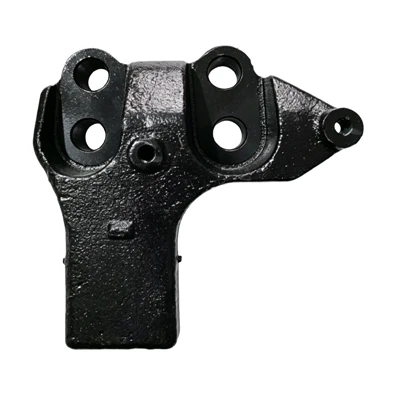
At the end of the day, suspension parts are tailored to every car’s unique needs—weight, performance, use case, even small design tweaks manufacturers make year over year. There’s no magic “one part fits all” solution, and trying to use universal parts is a bad call that can cost you money, time, or even safety. If you’re in the market for new suspension parts, do your homework, don’t guess, and reach out to a reputable supplier that knows their stuff. We’re here to help you find the right parts for your car, no confusion, no stress.
Automotive Chassis Parts References
- National Highway Traffic Safety Administration. (2022). Safety Risks of Incorrectly Installed Suspension Components. NHTSA Technical Brief.
- Society of Automotive Engineers. (2021). Vehicle Suspension Interchangeability and Platform Engineering Standards. SAE International.
- Automotive Aftermarket Suppliers Association. (2023). Aftermarket Suspension Parts Fitment and Compliance Report. AASA.
Ninghai Zhengda Moulding Co., Ltd.
As one of the most professional automotive suspension parts manufacturers and suppliers in China, we also support customized service. Please feel free to wholesale durable automotive suspension parts in stock here from our factory. Welcome to contact us for pricelist.
Address: No.2088-3, Xuemian North Road, Taoyuan Subdistrict, Ninghai County
E-mail: xgs9425@outlook.com
WebSite: https://www.cn-zhengda.com/
