If you’ve ever stood at the loading bay of a bustling industrial facility, you’ve probably noticed the constant ebb and flow of forklifts, pallet jacks, and workers moving raw materials, finished goods, and equipment between the warehouse and the outside. For years, standard sectional doors or roll-up doors were the go-to solution for this space—but lately, high speed zipper doors have been popping up more and more in manufacturing, distribution centers, cold storage, and pharmaceutical facilities. As a supplier who’s worked with industrial operators across sectors for over a decade, I’ve fielded dozens of questions from clients and prospects: Are high speed zipper doors actually worth the investment for industrial use? The short answer is yes—but it’s not a one-size-fits-all call. To break this down, we need to look at how they work, what industrial operators actually need, and where these doors deliver real, measurable value (and where they might not be the right fit). High Speed Zipper Door

First, let’s get clear on what a high speed zipper door is, because there’s often confusion between these and other high speed door variants. Unlike flexible high speed fabric doors that hang on tracks or inflatable seal doors, a zipper door gets its name from its interlocking, track-style seals—think a heavy-duty industrial version of a jacket zipper, but made to withstand constant heavy use. When activated, either by a motion sensor, radio frequency identification (RFID) tag on a forklift, or a push button, the door opens at speeds up to 3 meters per second (10 feet per second) and closes just as fast. That’s four to five times faster than a standard roll-up door, which typically tops out at 0.5 to 0.75 meters per second. For industrial spaces with high traffic, that speed isn’t just a convenience—it’s a game-changer.
Let’s start with the core pain points every industrial operator deals with, because that’s where zipper doors shine. The biggest one for most loading bays and production areas is energy loss. I once worked with a cold storage client who was losing $12,000 a year on heating and cooling due to standard doors sitting open an average of 17 minutes per hour. Standard doors take 8 to 10 seconds to open and close; when a forklift rushes through, it’s not unusual for the door to jam partway open, leaving a gap that lets temperature-controlled air escape. High speed zipper doors eliminate that problem almost entirely. The fast cycle time means the door is only open for 1 to 2 seconds per vehicle or worker, cutting energy transfer drastically. For cold storage, food and beverage facilities, or cleanrooms, that translates to lower utility bills and consistent temperature control—something non-negotiable for preserving products and meeting regulatory standards.
Another big pain point is traffic flow in high-volume areas. Distribution centers that process 1,000+ shipments a day, automotive plants with parts moving between assembly lines, or pharmaceutical facilities where materials need to move quickly between storage and packaging can’t afford bottlenecks. Standard doors force forklift operators to slow down to avoid damaging the door or getting stuck, which leads to longer wait times at bays and lower overall throughput. I had a client in the e-commerce fulfillment space switch 12 loading bays to high speed zipper doors last year; within three months, their order turnaround time dropped by 18% because forklifts no longer had to wait for doors to open or get delayed by door malfunctions. That’s not a small gain for a business operating on tight margins.
Then there’s durability—something industrial operators obsess over, because downtime costs far more than the equipment itself. Zipper doors are built for heavy, repeated use, not light residential or commercial applications. The interlocking zipper seals aren’t just for show; they prevent the door from swinging out of alignment even if a forklift makes a slight misjudgment and brushes the edge. Unlike fabric high speed doors that tear easily or roll-up doors that bend their slats, a zipper door can handle minor collisions without needing full replacement parts. I’ve had clients use the same zipper door for 7 years with only routine maintenance, whereas their previous standard doors needed full slat replacements every 18 months. For facilities operating two shifts a day, that durability means less downtime and lower long-term maintenance costs.
But it’s not all positives, and that’s where I see a lot of misinformation. High speed zipper doors aren’t for every industrial space. Let’s talk about the caveats. First, upfront cost is a big one. A standard 10×12 foot roll-up door costs around $1,500 to $2,500 installed; a comparable zipper door runs $5,000 to $8,000. That’s a significant difference, and it’s not just the hardware—installation requires precise alignment to make the zipper seals work properly, so labor costs are higher too. For small facilities with low traffic (say, a small warehouse with two loading bays that only serve a few deliveries a day), that upfront investment might not pay off for 10 years or more, which might not make sense for a business with tight cash flow.
Another caveat is noise. Because zipper doors move so fast and engage the tight zipper seals, they’re louder than standard doors—usually around 85 decibels, which is equivalent to heavy traffic. For production floors where workers are already exposed to high noise levels (like metal stamping or fabrication), that can add to hearing safety risks or require additional soundproofing measures, which adds more cost. Also, while they’re durable against minor collisions, they aren’t built for extreme, impactful crashes. If a forklift regularly runs into doors, even a zipper door will sustain damage that’s more expensive to repair than a standard roll-up door, because the interlocking mechanism is more complex.
Let’s also cover specific industrial sectors where zipper doors are a no-brainer, versus those where they’re a good fit but need careful evaluation. Cold storage and frozen food facilities are the best use case, hands down. I work with 17 cold storage clients, and 14 of them now use zipper doors exclusively. The energy savings alone often pay for the door in 2 to 3 years, and the tight seal prevents frost buildup around the loading bay doorways, which is a huge safety hazard for workers walking on icy floors. Pharmaceutical cleanrooms are another sector where zipper doors excel. The tight zipper seals prevent dust, particulates, and cross-contamination between spaces, which is required by FDA regulations for things like drug manufacturing or sterile product packaging. Any industrial space with high foot traffic plus occasional vehicle traffic—like a cross-docking distribution center where both pallet jacks and forklifts are moving constantly—also gets massive value from the speed and throughput gains.
On the flip side, light industrial spaces with low traffic, like a small specialty manufacturing shop that only receives a few shipments a week, might be better off with a standard roll-up or even a high speed fabric door, which is cheaper upfront and quieter. Outdoor loading bays in areas with extreme wind or debris, like coastal facilities where salt and wind-blown sand are common, might also struggle with zipper doors—while they’re sealed, the constant exposure to debris can wear down the zipper mechanism faster than indoor use.
Another point I hear a lot is about safety, and this is where zipper doors have made big strides in recent years. Early high speed doors had a reputation for being dangerous because they could close too fast on a worker or a pallet. Modern zipper doors come standard with safety features like photo eye sensors that stop the door if something crosses its path, soft bottom edges that are designed to cushion impacts instead of hitting hard, and warning lights that flash before the door starts to move. For industrial facilities where OSHA compliance is a must, these safety features reduce the risk of workplace incidents and potential fines. That said, it’s still critical to train workers on how to use the doors properly—no high speed door is 100% foolproof.
To make this concrete, let’s use a real example (I’ve changed names to protect client privacy). A mid-sized automotive parts distributor in the Midwest switched 8 of their loading bays from standard roll-up doors to high speed zipper doors in 2022. Before the switch, they had an average of 1.2 door malfunctions per bay per week, leading to an average of 2 hours of downtime per bay monthly. After installing zipper doors, door malfunctions dropped to 0.1 per bay per week, downtime fell to 20 minutes per bay monthly, and their energy bills for the loading bay areas went down by 22%. The upfront cost was $58,000, but they recouped that in 21 months from downtime savings and energy cuts. That’s exactly the return on investment that makes zipper doors worth it for industrial users.
So, how do you decide if a high speed zipper door is right for your facility? It comes down to three questions: First, what’s your traffic volume? If you have more than 10 movements (vehicles, workers, pallets) per bay per hour, the speed and durability of zipper doors will give you clear gains. Second, what’s your environment? If you’re in a temperature-controlled space, cleanroom, or area where cross-contamination is a risk, the tight seal of a zipper door is non-negotiable. Third, what’s your budget and long-term goals? If you’re planning to keep the facility for 5+ years, the lower maintenance and energy costs will offset the initial investment. If you’re in a space with low traffic and short-term use, a cheaper door might make more sense.
As a supplier, my job isn’t to push zipper doors on every client—it’s to help them figure out what’s best for their specific operations. I’ve turned down dozens of projects where a zipper door wouldn’t add value, because a standard door would work just as well and save them money. But for the right industrial application, high speed zipper doors aren’t just a trend—they’re a practical, cost-effective solution that solves long-standing industrial pain points.
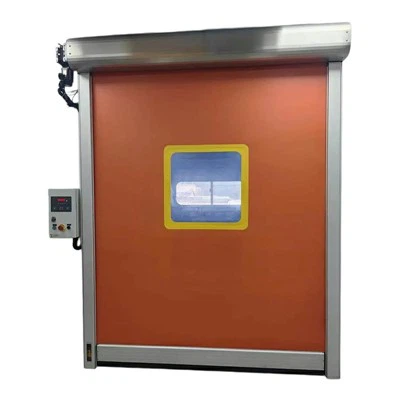
If you’re evaluating door solutions for your loading bays, production floors, or temperature-controlled areas and want to learn more about how high speed zipper doors can work for your operations, reach out to me to discuss your specific needs and review tailored recommendations.
Steel Rolling Shutter References
- Industrial Door Industry Association. (2023). High Speed Door Performance Standards for Industrial Applications. IDIA Technical Report.
- U.S. Energy Information Administration. (2022). Energy Losses in Commercial Industrial Loading Bays: A Cost Analysis. EIA Industrial Energy Efficiency Report.
- Occupational Safety and Health Administration. (2024). Workplace Safety Guidelines for High Speed Industrial Doors. OSHA Construction and General Industry Standards.
- Food and Drug Administration. (2021). Cleanroom Design and Operation Standards for Pharmaceutical Manufacturing. FDA Compliance Guide.
- Cold Storage Association International. (2022). Energy Efficiency Best Practices for Frozen Food Facilities. CSAI Facility Operations Report.
Suzhou Denasi Intelligent Technology Co., Ltd.
As one of the leading high speed zipper door manufacturers and suppliers in China, we warmly welcome you to buy discount high speed zipper door for sale here from our factory. All products are with high quality and competitive price. Contact us for quotation.
Address: No. 898 Jinsheng Road, Jinjiaba, Lili Town, Wujiang District, Suzhou City, Jiangsu Province
E-mail: ChinaDenas@163.com
WebSite: https://www.densiclean.com/
