If you’re a specifier, engineer, or project manager who’s ever stood in a pipe yard staring at stacks of shiny, silvery tubes wondering why some are labelled 304 and others 316, you’re not alone. As someone who’s spent the last 12 years sourcing, inspecting, and supplying stainless steel pipes for everything from municipal water lines to pharmaceutical process skids, I’ve seen firsthand how picking the wrong grade can turn a $5,000 pipe run into a $50,000 corrosion repair job. This isn’t just about material specs—it’s about matching the right stainless steel grade to the exact environment it’s going to live in. Let’s break down the most common grades we supply, their ideal use cases, and why skipping a grade check is a costly mistake. Stainless Steel Pipe
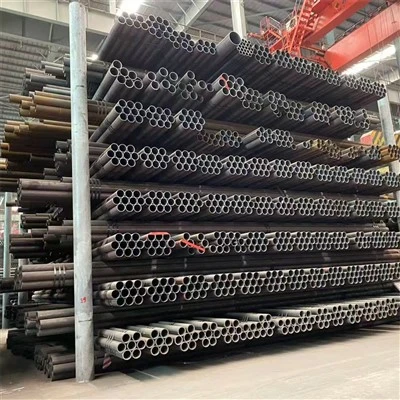
First, let’s get a quick refresher on why stainless steel matters for pipes. Unlike carbon steel, which rusts when exposed to moisture or chemicals, stainless steel’s chromium content (at minimum 10.5% by weight) forms a tight, self-healing oxide layer on its surface that blocks corrosion. Add small amounts of other elements like nickel, molybdenum, or nitrogen, and you get grades tailored to resist specific types of wear. For our pipe business, the top four grades that move off our shelves every day are 304, 316, 304L, and 316L, with a few niche players like 2205 making appearances for tough industrial jobs. I’ll walk through each one with real-world examples, because theory is great, but actual installation scenarios are where the rubber meets the road.
Starting with the workhorse of the stainless pipe world: Grade 304. Also called 18/8 stainless for its 18% chromium and 8% nickel content, 304 is the most widely used grade for general-purpose applications. It’s affordable, easy to fabricate (meaning we can bend, weld, and thread it without too much hassle), and resistant to most everyday corrosives. Here’s where it shines: municipal potable water systems, food and beverage processing equipment (think dairy milk transfer lines or brewery pipe runs), architectural handrails, and low-pressure plumbing in residential or commercial buildings. We supply 304 seamless and welded pipes in sizes from ½ inch to 48 inch outer diameter for these jobs. The catch with 304? It’s not great in environments with high chloride levels—like coastal areas, swimming pools, or industrial wastewater that has salt runoff. Chloride ions (from salt, road de-icing, or seawater) will punch holes in that chromium oxide layer, leading to pitting corrosion. I learned that lesson early on: a few years back, we sold 304 pipes to a coastal condo project in Florida, and within 18 months, half the underground pipe lines had corrosion leaks. We had to swap them out for 316, and that was a reminder that 304 is strictly for low-chloride, mild environments.
Next up, the workhorse’s upgrade: Grade 316. Add 2-3% molybdenum to 304’s mix, and you get 316, the go-to for high-corrosion environments. That molybdenum does two key things: it boosts resistance to chloride pitting and crevice corrosion, and it works better in slightly acidic or alkaline solutions. What does that mean for our pipe customers? 316 is the grade we spec for coastal plumbing, desalination plants, pharmaceutical process piping (which often uses mildly saline or acidic cleaning solutions), marine construction, and chemical processing lines that handle things like saltwater brine or mild acids. Last year, we supplied 316 seamless pipes to a offshore wind farm project in the Gulf of Mexico for electrical conduit and cooling water lines. That job required pipes that could withstand constant salt spray and immersion in seawater—316 was the only grade that passed the site’s corrosion resistance tests. The trade-off? 316 is about 15-20% more expensive than 304, so we don’t push it on every job. We always ask clients: “Are you working near salt, or where chloride might be present?” If yes, 316 is the pick.
Now, the low-carbon versions: Grade 304L and 316L. The “L” stands for “low carbon,” meaning these grades have a maximum 0.03% carbon content, compared to 0.08% for standard 304 and 316. Why does that matter for pipes? When you weld stainless steel, heat from the welding process can cause carbon in the base metal to react with chromium, forming chromium carbides along the weld seam. That robs the area near the weld of chromium, leaving it vulnerable to corrosion—a problem called weld decay. The low carbon in 304L and 316L prevents that carbide formation, so the weld area retains its corrosion resistance. I see this all the time in pipe fabrication shops: if a customer needs pipes that will be welded (which is most pipe installations), we’ll automatically suggest L-grade unless they tell us otherwise. For example, a food processing plant building a new line that requires multiple welded joints—we’ll supply 304L instead of 304, because even a small weld decay spot could harbor bacteria (a big no-no for food safety) or corrode over time. The L-grade is only a few cents more per pound than the standard grades, but it eliminates a huge long-term risk. I once had a client who skipped 304L to save $200 on a 100-foot pipe run, and 6 months later, the weld seam corroded, spilling fruit juice and shutting down their production line. That cost them $20,000 in lost revenue—way more than the L-grade premium.
Beyond the big four, there’s Grade 2205 duplex stainless steel, a niche but critical grade for extreme applications. Duplex steels combine a mix of austenitic and ferritic microstructures, giving them twice the strength of 304 or 316, plus excellent corrosion resistance in high-stress, high-chloride environments. That makes it the grade we supply for heavy industrial jobs: pipelines carrying highly acidic chemicals, deep-sea oil and gas piping, and structures that will see significant pressure or stress, like bridge expansion joints. The downside? 2205 is more expensive than 316, and it’s trickier to weld—you need specialized procedures to avoid embrittlement. We only recommend it when 316 won’t cut it, like a recent job for a mining company in Chile that was moving highly acidic copper ore slurry. 316 would have corroded in 18 months, but 2205 is projected to last 10 years. It’s a higher upfront cost, but for long-life, high-stakes projects, it’s worth every penny.
Now, let’s talk about what we never supply, because I’ve seen too many mistakes. We won’t sell a ferritic stainless like 430 for pipe use—430 is cheap, but it’s terrible for welding and has almost no corrosion resistance, so it would rust through in any outdoor or water application. We also don’t sell martensitic grades like 410 for pipes—those are hard and brittle, perfect for knives, not for tubing that needs to bend or withstand pressure. If a client comes asking for a “cheap stainless pipe” for a water line, we’ll steer them toward 304 or 304L, not a lower grade that will fail.
So, how do you pick the right grade for your project? Here’s a quick checklist I give all our clients: First, confirm the environment: is it fresh water or saltwater? Acidic or alkaline? Indoor or outdoor? Next, think about fabrication: will you be welding joints? If yes, go with the L-grade. Finally, budget: 304 is the cheapest, 304L is a slight upgrade, 316 is moderate, 2205 is the highest. We work with every budget, and we’ll never upsell you a grade you don’t need. We’d rather you get the right pipe that lasts than a cheap one that needs replacing in a year.

At the end of the day, stainless steel pipes are an investment. I’ve been in this industry long enough to know that a grade mismatch isn’t just a technical error—it’s a headache for every project manager, a cost overrun for the client, and a reputation risk for the whole supply chain. If you’re planning a project that needs stainless steel pipes, whether it’s a small residential plumbing job or a large industrial process line, we can help you pick the right grade, source the exact size and schedule you need, and deliver it on time. We work with engineers, contractors, and facility managers across industries, and we’re here to answer any questions you have about grades, specs, or material options. Reach out to us to start a conversation about your stainless steel pipe needs—we’ll help you make the right choice.
Stainless Steel Plate Sheet References
- ASM International. (2020). Stainless Steel Pipe and Tube. In Stainless Steel: Processing, Properties, and Applications (3rd ed.). ASM International.
- Davis, J. R. (Ed.). (1994). Corrosion of Stainless Steels (2nd ed.). ASM International.
- American Society of Mechanical Engineers (ASME). (2021). Specification for Seamless and Welded Austenitic Stainless Steel Pipe. ASME B36.10M-2021.
- International Organization for Standardization (ISO). (2019). Stainless Steels – Grades. ISO 15510:2019.
Shandong Henry Group Co., Ltd.
As one of the most professional stainless steel pipe manufacturers and suppliers in China since 1995, we’re featured by quality products and good price. Please rest assured to buy premium stainless steel pipe for sale here from our factory. Contact us for more details.
Address: No. 2688 Meili Road, Meilihu Office, Huaiyin District, Jinan City
E-mail: sales01@henry-china.com
WebSite: https://www.henry-steelpipe.com/
