If you’re a hunter, you know that having the right tool in your hands can make or break a hunt. I’ve been selling hunting poles for a few years now, and I get so many questions from guys (and gals) asking, “Wait, what even are these things good for?” Not going to lie, when I first started, I thought they were just for backcountry hiking, too—turns out, there’s way more to them than just keeping you steady on rocky trails. Let me break this down for you, straight from someone who’s actually tested these poles out in the field (not just sitting behind a laptop stocking shelves). Hunting Poles

First off, let’s get one thing clear: hunting poles aren’t just the same as the trekking poles you grab for a casual weekend hike. Yeah, they share some core traits—lightweight, collapsible, give you that extra stability on rough ground—but they’re built with hunting-specific stuff, like stronger locking mechanisms, quieter materials, and even some with camo coatings. That said, not every hunt calls for a hunting pole. Let’s run through the main types of hunting where they actually shine, and where they’re worth every penny.
Big game hunting is probably the first thing most hunters think of when they hear “hunting poles,” and for good reason. Let’s start with whitetail deer, since that’s one of the most popular big game species in North America. Whitetail hunters often have to stalk through thick, overgrown woods—think fallen logs, steep ravines, and mud puddles that can hide a twisted ankle. A good hunting pole takes pressure off your knees when you’re crouching for a 2-mile stalk, and it keeps you from slipping on wet leaves or mossy rocks. Last season, I had a customer come by, said he’d tried a stalk without poles and sprained his ankle, missed his shot because he was too busy limping. Swears by his poles now. Even elk hunters—those guys climb steep, pine-covered mountains, right? The elevation gain hits hard, and elk habitats are super rocky. Hunting poles help with balance on those narrow ledges, and they’re great for probing for hidden holes or uneven ground. Plus, if you’re packing out a quarter of an elk on your back at the end of the day, poles take so much strain off your lower body—you don’t feel like you’re going to collapse by the time you get to the truck.
Wait, but what about small game? Some people write small game off as “too simple” for poles, but I beg to differ. Think about rabbit hunting: you’re moving through brushy, overgrown fields, often in areas with lots of uneven ground (like old farm fields with ditches and root systems). A lot of small game hunters are also using dogs, so they’re moving fast, trying to keep up with their pup while also staying quiet. A lightweight, compact hunting pole (we make a bunch that fold up tiny) gives you that extra step of stability without getting in the way when you’re reaching to brush back a branch. Even squirrel hunting—you’re climbing up and down trees a lot, right? Not all of us are comfortable with climbing spikes every time we hunt, and poles give you that third point of contact when you’re stepping from one branch to another. I had a squirrel hunter tell me he saved himself from a face-plant last spring when his foot slipped on a wet tree branch—his pole caught his weight before he went tumbling. That’s the kind of thing you can’t put a price on.
Then there’s waterfowl hunting, which is a totally different ballgame. Most waterfowl hunts happen in marshes, swamps, or shallow lakes—ground that’s squishy, mucky, and full of hidden things like submerged logs or deep mud holes. If you step wrong, you’re not just slipping, you’re sinking up to your waist, and that’s how you lose a call, a gun, or even whole gear bags. Hunting poles (specifically the ones with flared, mud-resistant baskets) are made for exactly that. When you’re walking through a marsh, you tap the ground ahead of you with the pole to test how deep the mud is, so you don’t step in a 2-foot hole. I’ve seen so many new waterfowl hunters skip the poles and end up covered in mud, missing their hunt because they’re too busy trying to get unstuck. Our customers who hunt ducks and geese swear by these poles—they’ll even set them in the marsh grass as a makeshift stand when they’re waiting for birds to come in, so they don’t have to move around and make noise.
What about long-range or spot-and-stalk hunting? That’s the type where you’re glassing for miles at a time, waiting for a good shot, then hightailing it to get close. Spot-and-stalk is super common for species like mule deer or antelope, which live in open, flat or semi-flat terrain but still have those little uneven spots that trip you up. When you’re glassing, you can rest the end of your pole on the ground to prop up your binoculars—way steadier than holding them with your hands for 20 minutes straight. No more shaky binocular views that make you miss seeing a buck! And when you do decide to stalk, the pole helps you stay low, too—you can use it to push brush out of the way without making noise, and it keeps your balance when you’re crawling on uneven ground. One of our regulars is a mule deer hunter in Wyoming; he said last year he used his pole to cross a shallow creek without getting his boots full of water, and it helped him stay hidden behind a small hill while he closed the distance on a 3-point buck. Shot was clean, no mistakes, all because of that extra stability.
Wait, are there any hunting types where hunting poles aren’t the best fit? Yeah, definitely. If you’re hunting in super tight, thick brush where every little thing gets in your way—like some types of grouse hunting—bulky poles might get caught on branches and slow you down. That’s why we make ultra-compact, collapsible poles that fit in a pocket or a small pack for those tight spots. And if you’re hunting from a permanent stand—like a tree stand or a blind that’s bolted down in one spot all day—you probably don’t need them, because you’re not moving around much. But if you’re doing any kind of moving hunt, where you’re covering ground and trying to get close to game, these poles are a game-changer.
I’ve heard a lot of hunters say, “I don’t need extra gear, I can handle it.” But here’s the thing: hunting isn’t just about pulling the trigger. It’s about getting to that spot without injury, staying steady when you need to take a shot, and not wasting the whole hunt because you twisted your ankle or got stuck in mud. Hunting poles aren’t a luxury—they’re a tool that solves real problems, ones that every hunter has dealt with at some point.
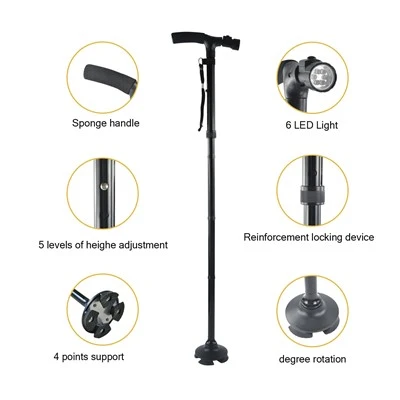
If you’re ready to test them out, we’ve got all kinds: lightweight ones for backcountry hunts, heavy-duty ones for big game, compact ones for brush and small game, even ones with camo to match your gear. We work with hunters of all levels, from beginners who just bought their first rifle to seasoned guides who’ve been doing this for decades. If you’ve got questions about what kind of pole would work best for your specific hunt—whether it’s whitetail, waterfowl, small game, whatever—hit us up to chat. We’re not pushy sales guys, we’re hunters too, and we just want to help you find something that makes your hunt better.
Hunting Poles References:
- Kays, R. (2021). Field Gear for Modern Hunting. Outdoor Life Press.
- National Shooting Sports Foundation. (2022). Hunter Safety and Equipment Best Practices. NSSF Publications.
- Backcountry Hunters & Anglers. (2023). Essential Tools for Stalk and Big Game Hunting. BHA Field Guides.
Ninghai Jianfeng Travelling Products Co., Ltd.
As one of the most professional hunting poles manufacturers and suppliers in China, we also support customized service. We warmly welcome you to wholesale bulk cheap hunting poles from our factory. Quality products and reasonable price are available.
Address: No.308, Dongsheng Road, Shenzhen Town, Ninghai County, Ningbo City, Zhejiang Province, China
E-mail: leo@nhjianfeng.com
WebSite: https://www.nhjianfeng.com/
