Hey everyone, if you’ve ever stood near a substation or walked past that big metal box on a power pole in a neighborhood, you’ve seen high-voltage switchgear—and probably didn’t even notice. As a high-voltage switchgear supplier, I get asked a ton of questions about what makes this gear reliable enough to keep hospitals, factories, and your home power on when the grid needs it most. The question I get way too often that still blows me away how many people skip asking about is the temperature rise test. Let’s break this down like I would to a new engineer or a local electrician stopping by our booth at a trade show—no stuffy textbook jargon, just real talk about why this test isn’t just a checkbox for us. High-Voltage Switchgear

First off, let’s ground this: high-voltage switchgear is all about switching, protecting, and isolating high-voltage electricity (usually above 1kV, but we deal with up to 36kV for most of our projects) when something goes wrong—like a short circuit, a tree branch touching a line, or even a big factory turning on all their equipment at once. If this gear overheats? That’s not just a minor glitch. Overheating can melt contacts, warp busbars, or even cause a fire that takes out power for a whole city block. The temperature rise test is how we make sure our gear doesn’t do that—plain and simple. It’s not some random lab exercise; it’s a stress test that mimics exactly what the switchgear will deal with 24/7 in the real world.
Let me walk you through how we actually run these tests at our in-house lab—because we don’t outsource this, and that’s a big point for us. Here’s the lowdown: we take a brand-new switchgear unit, hook it up to a programmable load generator that pumps in current at its rated capacity (say, 2000A for a medium-voltage unit), and let it run non-stop for 100 hours minimum. That’s not a quick test—we’re making sure it doesn’t overheat even after hours of constant use, not just a 10-minute blip. Now, the key here is “temperature rise,” not just surface temperature. The rise is the difference between how hot the gear gets during testing and the ambient room temperature in the lab. So if our lab is 25°C (that’s a standard we use) and the busbar hits 60°C, that’s a 35°C rise. Got it? Because a 60°C surface temp is fine if the room is cold, but a small room’s ambient temp of 50°C would make that 60°C way too hot. We measure every single hot spot—contacts, bus connections, terminal lugs, even the inside of the breaker mechanism—with precision thermocouples. No guessing here. We also monitor voltage drop across connections, because a bad connection will create extra resistance, which turns into heat. That’s the sneaky part most people don’t think about: even if parts are rated for high voltage, a loose bolt or a cheap contact can turn a perfectly good switch into a fire hazard fast.
Wait, let’s be real—this test isn’t just for new gear. We also run temperature rise tests for our custom builds, especially when a client wants something that’s a little off-spec. Like last year, a local mining company needed a switchgear unit that could handle a 10% overload for short periods because their processing plant ramps up output at night. We tweaked the busbar size a little, then ran the test at 110% rated current for 120 hours just to be safe. No complaints from them afterward, by the way. That’s the stuff we do that makes us different from some other suppliers—we don’t just stick to the IEC standards (though we follow those to a T) and call it good. We push for extra testing when the client’s use case is tough.
Now, why does this matter to you, whether you’re a plant manager, an electrician, or just someone who wants reliable power? Let’s get into the real-world risks of skipping this test. A few years back, I heard about a substation where a brand-new switchgear unit didn’t get a proper temperature rise test. The busbar connection was torqued 10% less than it should have been, so when the substation kicked on during peak demand, the connection heated up. Over 6 months, that heat ate away at the contact, leading to an arc flash that took out power for 12,000 homes. That’s not just a repair bill— that’s lost revenue for businesses, spoiled food in grocery stores, even interrupted critical care at a nearby clinic. The temperature rise test catches that loose bolt, that shoddy contact, before it ever hits the field. For us, that’s non-negotiable. Every unit we ship has a test report attached—no exceptions. Our clients can pull it up anytime, even 5 years down the line, to prove their gear passed the test.
I get it, some people think “the factory should handle that.” But here’s the thing: we work with clients of all sizes, from small industrial parks to big utility companies, and they all have one same worry: downtime. A single hour of unplanned power outage can cost a manufacturing plant tens of thousands of dollars. The temperature rise test is our way of eliminating that risk before it even starts. And for our team, it’s personal—we don’t want to be the reason someone loses power because we cut corners on testing.
Let me clear up a common myth too: you don’t need to run this test every single time you replace a part. Wait, no—if you replace a major component, like a breaker or a busbar, you definitely do. But for routine maintenance, we recommend thermal imaging checks every 2 years. That’s a quick, non-invasive test where you use a heat camera to scan the switchgear while it’s running. It’s basically a mini temperature rise test for the real world. If you see a hot spot on the busbar that’s 10°C hotter than the surrounding area, that’s a sign of a loose connection—way before it becomes a problem. We train our clients’ maintenance teams on this, too, because if you catch a bad connection early, you can tighten the bolt during a scheduled shutoff, not during a blackout.
Another point: the test parameters change based on the type of switchgear. A metal-clad switchgear unit for utilities has different temperature limits than a pad-mounted unit for residential neighborhoods. We tailor the test current and duration to the specific unit. For example, pad-mounted units are in tight enclosures, so heat builds up more inside. We run tests in a chamber that mimics the enclosure’s ventilation, so we get an accurate reading of how it will perform in the actual box it will sit in. No generic tests here—every unit’s test is specific to its intended use case.
What do we look for in the final results? First, we make sure the temperature rise is under the limit set by IEC 62271-1 (that’s the standard we follow, by the way) and any client-specific requirements. For most connections, that limit is 65°C rise over ambient. For internal parts, it’s a little lower to protect the insulation. We also check that the temperature is stable after those 100 hours—no creeping heat, which would mean a bad connection or a faulty component. If any hot spot goes over the limit, we tear the unit apart, fix the problem, and run the test again until it passes. That’s the process we go through for every single unit we sell.
I’ll be honest with you—this test adds a little time and cost to each unit. But when a client tells us their switchgear has been running 10 years without a single overheating issue, that’s when it’s worth it. Last quarter, we had a client come back with a referral for another unit because theirs had been so reliable. They said their maintenance team hasn’t had to touch the busbar connections in 8 years. That’s the payoff of doing the temperature rise test right.
If you’re in the market for high-voltage switchgear, don’t just ask for a quote. Ask about the temperature rise test. Ask for the test report. Ask how many hours of testing we ran, what current we tested at, and what limits we stayed under. If a supplier can’t show you that, or if they say they “skip that to keep costs low,” run the other way. You get what you pay for, and cutting corners on testing will come back to bite you.
At the end of the day, high-voltage switchgear is the unsung hero of the power grid. It’s there when you flip a light switch, when your computer turns on, when the factory down the street starts its machines. The temperature rise test is how we make sure that hero doesn’t burn out before its time. We don’t just build switchgear—we build reliable power infrastructure, and that starts with making sure every part of that gear can handle the heat.
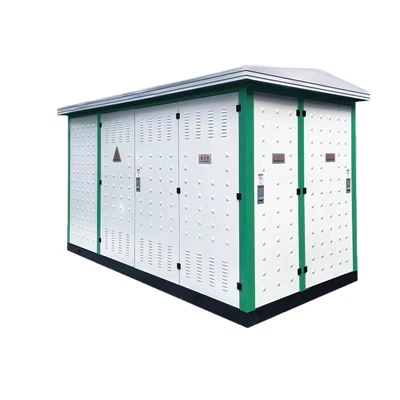
If you’re curious about our testing process, have questions about temperature limits for your specific project, or want to chat through your switchgear needs, reach out to our team. We’re here to help you pick the right gear that keeps your power on, no stress, no surprises.
Box Type Substation References
IEC 62271-1: High-voltage switchgear and controlgear – Part 1: Common specifications, International Electrotechnical Commission, Geneva, 2017.
ANSI C37.100: American National Standard for High-Voltage Switchgear and Controlgear, American National Standards Institute, New York, 2020.
NIST SP 800-55 Rev. 1: Performance Measurement Guide for Information Security, National Institute of Standards and Technology, Gaithersburg, 2011.
Jiangxi Yihong Electric Power Technology Co., Ltd.
As one of the most experienced high-voltage switchgear manufacturers and suppliers in China, we also support customized service. We warmly welcome you to buy high quality high-voltage switchgear from our factory. If you have any enquiry about pricelist, please feel free to email us.
Address: Chating Industrial Park, Guangxin District, Shangrao City, Jiangxi Province
E-mail: 15779933057@163.com
WebSite: https://www.yihcn.com/
